
*
HAPPY DAY
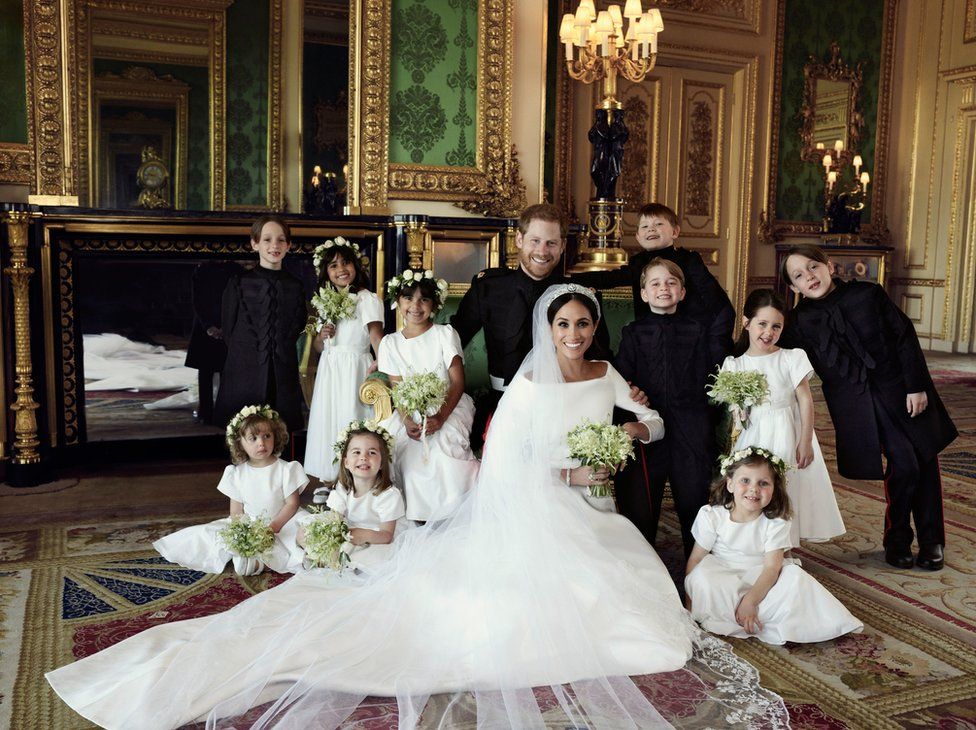
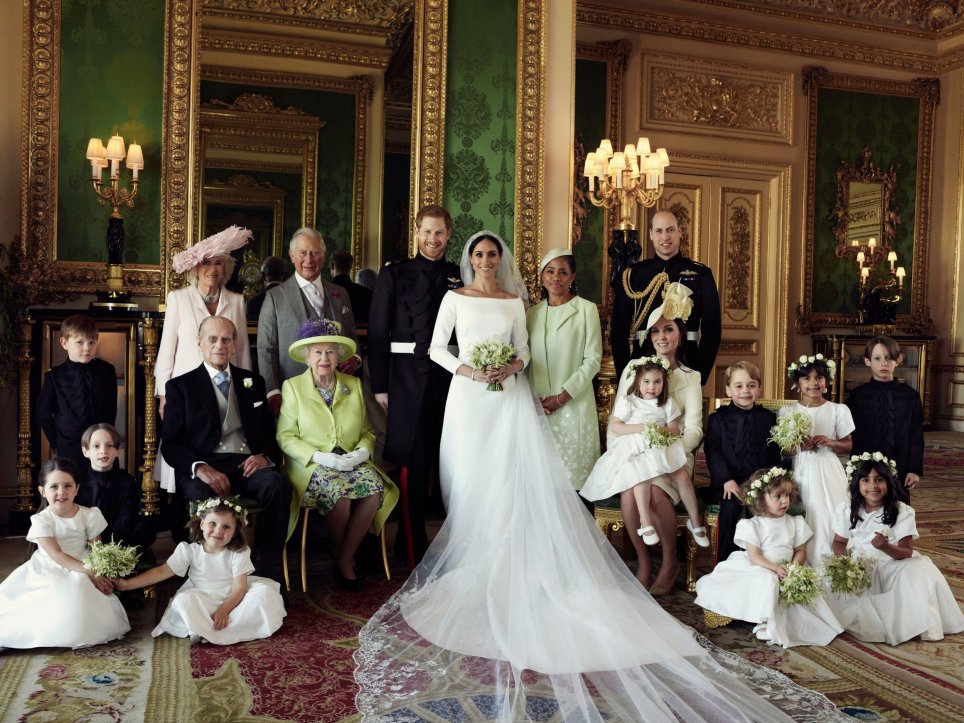
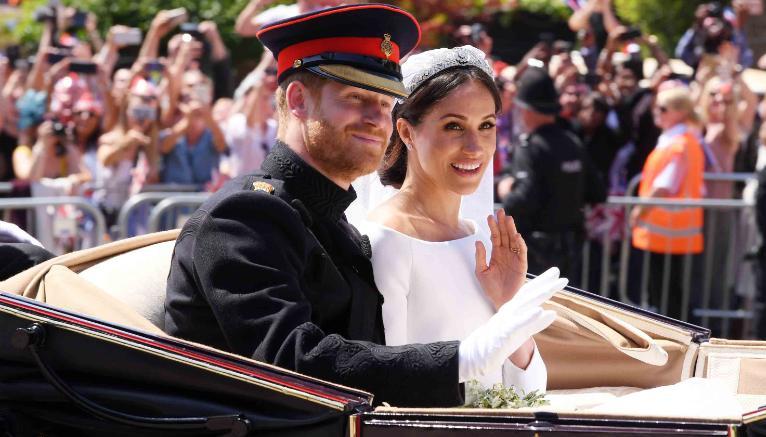
PRINCE HARRY AND MEGHAN
THE DUKE AND DUCHESS OF SUSSEX
MARRIED AT WINDSOR ON SATURDAY 19 MAY 2018
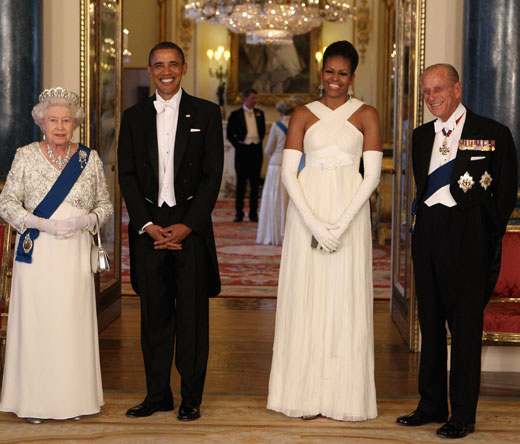
We are very appreciative towards the Queen for giving our county such a sparkling young couple. I'm sure that Prince Harry and his gorgeous bride, Meghan, will prove huge assets for our warm and wonderful Sussex by the Sea. We're a laid back bunch and you'll fit in just fine! Welcome and congratulations and many years of happiness together. You also have a charming Mother-in-Law, Harry, always look after her as well.
LOOK WHO'S TWEETING
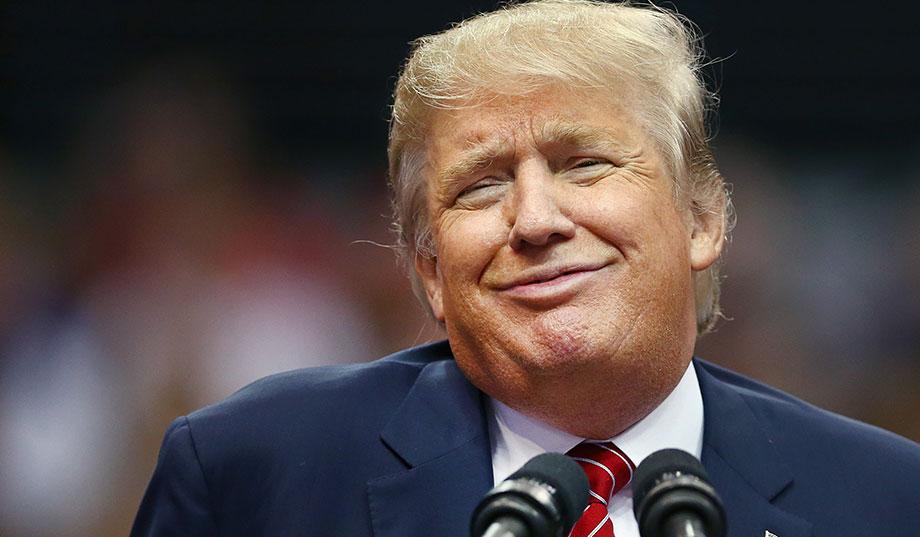
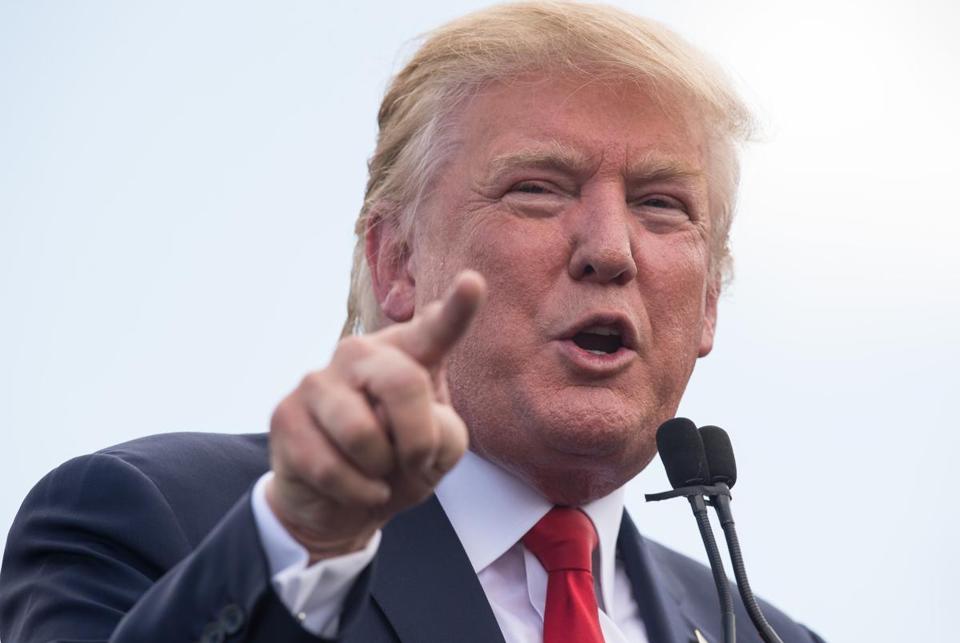
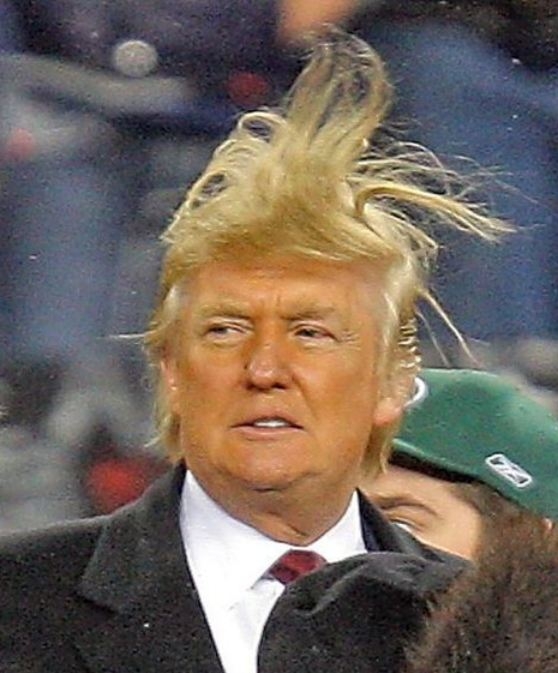
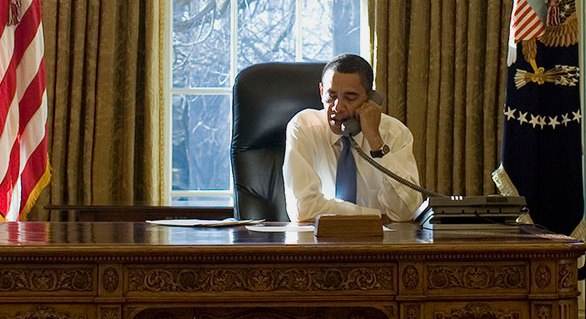
Which Donald presides over the White House? All three? Lots more?
The Manchurian candidate?
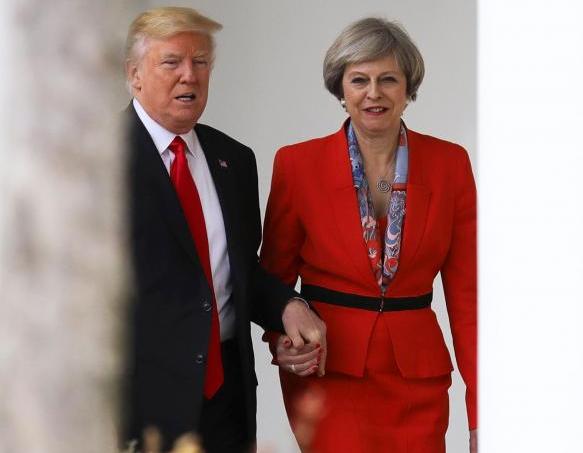
For about forty years British diplomats including two recent ambassadors to Washington have preached that the special relationship is a myth.
BREXIT
Since writing the piece below we have seen further evidence that many members of the House of Commons spend too much of their time drinking and pinching female bottoms - and some male ones as well.
Meanwhile Mutti Merkel tries to blackmail Britain's taxpayers into paying a modern version of Danegeld to Germany's export markets ( the EC countries ) but at the same time wants to bar British services from the EC after Brexit. One, we shouldn't pay a rapen as the Swiss say, and two, we should pull out of the present negotiations and opt for WTO rules.
You will find plenty about all this on the websites of Veterans for Britain, the Red Cell and Brexit Central including articles by Adrian. Directly below are his latest thoughts on foreign policy and defence after Brexit.
WOOD AND TREES
General Sir Nick Carter, Chief of the General Staff, recently gave a lecture at the RUSI about the urgent need for the Army to modernise. This was all good stuff and long overdue. I liked his emphasis on leadership training for dispersal tactics and more structured approach to signals and cyber warfare. None-the-less, the British Army never fought in Vietnam and remains about fifty years out of date when it comes to tactical organisation for airmobile warfare. Sir Nick also mentioned how the Russians were designing two man crew tanks as though this idea was brand new – back in the early 1980s I wrote an article for the RUSI Journal that described AAI Corporation’s new two man tank which could add or strip off armour like a knight of old. The Army ( US ) surprise, surprise, Ivan Barr, the Managing Director of AAI, told me and an American friend, wanted a commander in charge of the two crew! So they designed one with enough room, although inevitably slightly heavier. Unfortunately, although the US Marine Corps showed interest, the Army decided to stick with their new big beast called the Abrams.
As the media were invited to the lecture at the RUSI the traditional question and answer session afterwards was on the record. (By custom it’s normally off.) One questioner pointed out that not once had China been mentioned. Sir Nick replied that China was not an immediate threat – personally, I would have qualified that with ‘ yet’ because otherwise his answer rather brushes aside that the challenge from China is to our freedom of passage at sea and rebuilding our deterrence at sea and in the air after such deliberate politically driven damage takes years, not months. Nobody raised the absurd situation where more than forty years after the Vietnam War the British Army still relies on the RAF for its troop-lifting helicopters. I was watching from Switzerland – an excellent improvement for members who are not based near London – thus not able to raise a hand for a question. As the dire threat comes from Russia, I was surprised that nobody raised Vorausshau 2040 – the German Army’s recent paper, Strategic Perspective 2040 which last November was leaked to the weekly magazine Der Spiegel.
This strategy plan is a watershed. Not since the Second World War has the German Army contemplated a future without belonging to the NATO command structure and not every German will like this idea. The author, Katrin Suder, has worked for McKinsey. Her study’s message is that Europe cannot rely on the Americans any longer. (Although for us Brits, having the Americans involved with Europe’s defence kept the peace for seventy-two years and still does even with Donald tweeting all day long.) Parts of the report are probably contributions from diplomats and officials but that’s equally illuminating in itself. Some of the forecasts were astute, indeed already have come to pass. The central worry is that a break up of the EC could bring about collapse of the surrounding economies and kill off these valuable export markets. The consequent unemployment could lead to civil disorder, even another Weimar crisis. One assumption is that the EC started to break up during 2008. ( This is when the Lisbon Treaty did away with each member country’s veto and replaced it with majority votes.) Another assumption suggests that NATO started breaking up during 2014. (This was the year when member countries were asked to work towards spending 2% of their gnp on defence and 20% of that on new equipment. Germany falls well short of both targets each year.) Now a neutral observer might be forgiven for concluding that messy introduction of the Euro – when the German voters were not given a vote - and the present push for an EC super-state with its own military also could have something to do with both these break up scares. Add to this Sigmar Gabriel and Martin Schultz calling for a United States of Europe built on Germany and the Euro and you have the whole picture bar a few details. Martin Schultz openly contemplates expelling the Poles and Hungarians and maybe others who won’t adopt the Euro nor always toe the line. Angela Merkel’s speech at Davos was a barely coded message promoting a political dash for a united states of Europe.
The Army planners are convinced that Germany must look after its own security. An obvious start is to concentrate on binding together the inner core of Euro zone countries, economically, politically and militarily. An outer ring of satellite economies, which includes us Brits, must be kept within the political and economic orbit of the Euro zone and its political and economic sun, Germany. Hence there may be a dubious logic behind crushing any bids for independence from Catalonia and the gaoling of their elected government; likewise the disapproval of protest in Austria, Hungary and Poland over invasions of Arab refugees; deep offence when the Poles want to clean up the way their judges appoint each other which they say hasn’t changed since Communist times. These recent crises may shine a torch on the style of recent EC negotiating tactics over Brexit – namely, blatant interference in our politics on a scale that makes the FSB look like walk on extras; conjuring up fantasy problems only to make impossible demands such as splitting Northern Ireland from Great Britain; combining these with demands for absurd sums of money; meddling in our affairs by hiding behind has-been politicians like Tony Blair and Nick Clegg; veto even the poorest trade deal offer and combine this with demands for a second referendum.
While I fully respect those who wanted to remain, we voted to leave, and now a brain washed fifth column seems hard at work in London, mostly within the circuit of the M 25, but regardless of the wishes of the millions of others who live in that foreign country that starts about thirty miles in any direction from Charing Cross. All talk of divorce payments, lousy trade deals or trade threats, demands for second votes, for EC defence with an EC army, indeed all speeches by the likes of Angela Merkel, Martin Schultz and Sigmar Gabriel should be swallowed carefully and digested from the viewpoint of the German Army’s Strategic Perspective 2040.
Why the rush? While we couldn’t influence the EC, our membership provided a sea anchor that slowed down moves away from NATO towards a unified state with its own chain of command and military forces. Dragging out the negotiations on Brexit allows the EC to prolong the period when we pay but cannot attend any EC political summits. Once we are finally out, on a clear day we will offer a highly visible alternative to the super state, our white cliffs are often marching along the skyline a mere twenty-one miles from Calais.
As for the other large neighbours, an attempt to lure Ukraine into the German orbit as another export market turned sour through misreading Putin. To their surprise, he invaded. They were caught out a second time by America’s reaction. Deciding to deploy Baroness Ashton and her EC action force diplomats as their public face the Germans rashly brushed aside Britain, the USA and Russia, treaty guarantors of Ukraine’s integrity following the dismantling of the latter’s nuclear arsenal – itself one of the truly great achievements following the collapse of the Soviet Union. The price for EC miscalculations were lives lost and ruined as Putin invaded Eastern Ukraine and Crimea. Russian suspicion and bungling led them to shoot down a civil airliner. Nor is the danger over but Putin’s ground forces although modernised, cannot sustain a hot operation for longer than a matter of weeks. Perhaps Angela Merkel, educated in the communist system of East Germany and a confident Russian speaker, over-estimated her influence on Putin. After all, she has a former German Chancellor deeply involved with a key Russian company, moreover the one who ran for election with the most anti-American campaign in modern German politics. Shroeder’ way for dodging NATO sanctions on Russia was to build a gas pipeline through the Baltic Sea from Russia to Germany.
According to Der Spiegel, ironically, the Army report speculates that one day the Poles and Baltic states might throw in their lot with Russia. The planners also worry that the Hungarians and the Balkans might do the same in protest against an EC run by Germany and France. Keep in mind, as an old friend and onetime very senior German intelligence official explained to me one evening over supper at our home, that our membership of the EC made Franco-German rule more acceptable for the rest. I observed that was not a sufficiently good reason for us to stay and, besides, millions of us including my wife and I had voted to leave. Yet one could argue that the present situation in Poland suggests the reverse of what the planners fear is happening. Whether it’s through buying gas or investing in Baltic pipelines and Siberian car factories, Germany seems the country with the close economic relationship with Russia. (During his lecture, General Carter mentioned the importance of reducing our dependency on Russia for energy!) Far from diplomatic flirting with the Russian bear, Poland and the Baltic states appear glad to have NATO troops and supersonic fighters based in their countries while some in neutral Sweden even think of moving closer to NATO. As for the former Balkan satellites, RAF Typhoon fighters are based in Romania and Estonia on rotation and last spring HMS Daring joined exercises in the Black Sea. Though only token deployments, they are welcome. Are the Eastern Europeans ready to hand over their protection from Russia to Putin’s telephone friend, Angela Merkel?
The general’s main direct mention of Germany concerned the wisdom of completing the final pull out of all British troops. He thinks not. And some 4,000 British troops will remain in North Germany based around Paderborn and Sennelager, home of the 20th Armoured Brigade. This sounds good sense – but for how long? I wonder if they read Der Spiegel in the Cabinet Office? It doesn’t sound as though they do. Surely the British Embassy in Berlin does although they may draw other conclusions.
After reading Der Spiegel and then comparing their report with conversations with German friends, comparing the speeches of Sigmar Gabriel and Martin Schultz, Angela Merkel’s speech at Davos, one spots a pattern. Our departure from the EC opens a window of opportunity and they must have the courage to finish the business. My personal forecast is a gradual disengagement from NATO by the Euro zone countries led by Germany until eventually that leads to a Russo-German pact draped with an EC banner. Negotiating such a pact may take longer than Angela Merkel’s latest Chancellorship. German political leaders may genuinely believe that under their management the new United States of Europe ought to be able to pull off a diplomatic coup that brings peace to Eastern Europe including the Baltic and Balkan states, moreover, one that removes all threats from Russia. Leaving aside that the actual United States has Canada and Mexico for neighbours, such a deal would safeguard Germany’s considerable investments in Russia, above all cost far less than another Cold War arms race, or God forbid, another European war. The latter fear makes it much easier to sell a pact to German voters. Putin, of course, wants to split NATO and as part of any deal will demand the EC lifts all sanctions. As part of a new ‘ peace dividend ’ our troops would swap Paderborn for Salisbury Plain. The Americans would also be asked to leave Europe. Such a pact will leave Britain and Norway as the only real NATO members on this side of the Atlantic - unless the Danes, all three Baltic states, the Poles and Hungarians prefer to stick with us and the neutrals become worried enough to seek an informal pact with the alliance.
Lifting sanctions is the high value card and it’s held by Angela Merkel as she pursues rapprochement with Putin. He’s not an easy neighbour and any deal with him will be tricky to police. Along the Russian marches some countries should worry that they may pay a steep price for diplomatic and defence incompetence in Brussels - as has Ukraine already. There’s also the danger of tensions to come as raised by General Sir Nick Carter – Estonia, Georgia and Moldavia, Poles, the other Baltics and Balkans, any one of them could be next – as history goes they’ve only just emerged from fifty years of tyranny and still the Russian’s meddle, even in tiny states far away from their frontier like the northern half of Macedonia. I rather doubt that ordinary people throughout the former Warsaw Pact countries trust their first violent occupiers to save them from the second ones. Poles know reality. From the mass graves in Katyn Forest to the Warsaw Pact maps in Polish for the invasion and occupation of Britain that are on sale in London – the Poles were going to occupy us for the Russians – they have seen what happens when you have no friends within reach. Some have swallowed the EC lexicon. I have been lectured by the wife of a Polish ambassador that Angela Merkel saves Poland from Russia, that the British like the Swiss have no experience of war. I asked the lady if she knew that my country declared war on the Germans three days after hers was invaded by them in September 1939. She looked puzzled.
Listening to Sigmar Gabriel one pictures a Continent where the only independent democracy is Switzerland, a target because of its independent law, independent politics, independent trade and independent Swiss Franc. Stealing the Swissie would pay for countless EC junkets. Since then we have had the Merkel speech in Davos hinting at a European foreign policy as a counter to the protectionists – the United States, us and the Commonwealth, and many others – ignoring that she spoke for the largest Zollvereign on the planet. I found her remarks about trade protection plain hypocrisy but what she said obliquely about Russia was very revealing, ‘ Since the Roman Empire and the Chinese Wall, we know that simple isolation does not help in securing borders and a good cooperation with neighbours is needed. Merkel went on to explain that this includes deals with neighbours such as the EU-Turkey migration deal that she brokered. Expect further diplomacy towards better relations with Moscow leading to that camouflaged pact. Because, should the EC have its way, all the other ancient states – including our islands if the fully brainwashed remainers had their way as well – would become satellites, controlled through Brussels, but Eurozone branch plants of the German economic and political sun.
Already we stray into the realms of historical root causes and their unanticipated consequences, what Mervyn King describes as random uncertainties. The origins of this historical path are fascinating but that’s a long time ago and another story. Whether she intended to or not, Angela Merkel is setting up an EC empire with control over 27 satellite economies and a desire to become a military power. Quite a few people living next door in Switzerland are asking themselves, ‘ Haven’t we seen this twice before?’ They are not impressed by the creeping lack of democracy in the EC and its hostility to the political foundation stones of their country in particular. My immediate concern is how senior ministers in London quite happily advocate placing the Queen’s armed forces under the control of a group of equally mediocre foreign politicians who are steadily falling under the spell of this vision for a new imperial power. This would have a seismic impact on all our other alliances and destroy our relations with the United States and the Commonwealth. If these Ministers support the idea, they should come clean and defend their true position before the voting public. If they didn’t know what’s happening, they’re not fit for public office. Trump is not a reason, he’ll be gone in three years. This is about our survival as a free country. The French are ready to collaborate a second time and included at the top table simply to soften the elbows of imperial rule from Berlin.
An early test will be whether the eventual Berlin/Brussels/Paris management decides to side with Putin against the Americans and rump of NATO and lift EC sanctions from Russia. This would help Putin restore the poorly performing Russian economy. ( He can afford his re-armament programmes quite comfortably. ) Where does Mrs May and her mostly remain Cabinet suppose Britain would stand? Deciding is their job, not General Nick Carter’s. Who advises the Cabinet on this? Senior officials, who are, for want of any other description, military virgins. Would Britain object? Would we side with the United States? Even if we supported the Americans, would anyone in Berlin/Brussels/Paris give a rodent’s backside?
Ardent remain fans don’t seem particularly concerned that the UK would no longer exist as an independent country. Our pound would have been gobbled by the Euro Zone’s bottomless pit. Our armed forces would form part of the European super state’s border force – exactly as proposed by some mysterious person speaking for the Treasury, Cabinet, FCO or all three in an article in The Times the other day. The last remnants of our global power would have been destroyed a hundred years after the navy saved our Army and many French soldiers from Dunkirk while RAF fighters won the air battle over the beaches. Both services and the little boats saved our country but what a national disgrace. This time not a shot will have been fired. The present generation of astonishingly worthless politicians outnumbers the sensible ones by roughly ten to one – they will have inflicted a humiliating and irrevocable defeat on the British people better than could any enemy. Do we really have to go through another global humiliation before the penny drops with the voting public?
Were we to follow the remain agenda, we would immediately disqualify ourselves from membership of the Five Eyes intelligence group and bring to an end five-hundred years of shared history with the Commonwealth. You have to be obsessed with the EC project to even consider such stupid acts of self-harm. Common sense suggests we should do the complete opposite. That instead, we should start turning the Five Eyes into the foundation stones a new global alliance. We should have a plan to support the Baltic states and Poland through Scandinavia. The neutrals may well include the Eurozone and Europe eventually could consist of two groups of neutrals living as uneasy neighbours with Russia. That tends to suggest that our Army needs to modernise but not as an AIT version of the old armour heavy Rhine Army. We need an Army that is highly airmobile including its armour for deep penetration raids. We will need more, not less Airborne and the Royal Marine Commandos who can arrive fast, hit hard, and swiftly vanish into the night. My hunch is that with a large spoonful of luck, we have until 2030 not 2039 to rebuild this nation, restore its self-belief, and dare I warn, rearm properly, particularly at sea and in the air. Some of us lived through this nightmare the first time, in real life.
I’m not convinced that the average German will sign up for this high risk plan without asking a great many questions. As another German friend remarked dryly, ‘ Not everyone is a fan of Mutti. Now you’re on the way out, she’s in a hurry. That’s why she wanted to make sure you would leave by giving Cameron nothing and showing him the door. She will try to force through these proposed changes on the remaining member states – at least half a dozen of them don’t like her ideas. One of those half-dozen countries even may turn out to be Germany. She doesn’t want another election, she knows she’d lose even more seats to Alternative for Deutschland.’
An island people just across the sea, free spirits with global influence, a strong economy and powerful armed forces, won’t be ignored by anyone on the planet. Such a nation gives a great deal of reassurance to the small buffer countries along the marches between Germany and Russia, Turkey and the Near East. Perhaps we should add France to that list needing moral support as Macron launches his tapestry diplomacy.
At present, by disarming at sea, just as John Nott invited the Argentines to invade the Falklands, we are inviting Russia to take further risks. The first thing Stalin did after the Nazi-Soviet Pact was to occupy the Baltic States and the second was to invading Finland. Thankfully, not all Germans regard it as clever to dismantle NATO. As for our recent leadership, Tony Blair was out of his depth and still doesn’t realise his limitations. David Cameron even repeated the mistakes of the 1920s. ( Don’t people read any longer?) Margaret Thatcher learnt the hard way but she always listened and consequently rarely repeated mistakes. The last Prime Minister with a warm relationship with an American President and sound personal knowledge of the Armed Forces, began rebuilding the navy - Jim Callaghan, who had served in the Royal Navy. One morning during spring 1982 in an Ottawa hotel, he told me about the previous Argentine invasion scare. As I rose to take my leave, he said, ‘ Like to do me a favour, Adrian. When you’re on the phone to Downing Street this morning, remind the lady who ordered all those ships she’s sending south.’
We should also learn from the Swiss. They will tell you that everyone knows the best people don’t go in for politics. Long ago they took away all serious decisions from their politicians. You cannot raise or lower taxes here without a referendum. Also, the Swiss have votes which require a majority of cantons in favour as well as winning the national popular vote. Perhaps in this electronic age, we could just pull down the Houses of Parliament and save ourselves the repair bills. Most of its inmates don’t represent the wishes of their voters anyway. Churchill in his memoirs describes how when a great cause is presented to the people all manner of surprising things happen, another lesson from Dunkirk and that first darkest hour. Ignore our failed or frustrated politicians, those wannabe’ diplomats in the media. Let’s copy the Swiss and decide the big things ourselves. That’s the real lesson from the 23 June 2016.
*
The referendum last summer was a gamble, the dice thrown by two professional politicians. Both seemed to have only a vague clue how ordinary people in this country live and even less how we think. They expected a fairly comfortable win although just to make sure deployed the government’s resources and the tax payers’ money, enrolled umpteen foreign big wigs from President Obama to Madame Lagarde, orchestrated threats from the governments of most EC member states and from the EC Commission, all playing their parts in a campaign against the British voters. Well guess what, the heirs of Blair – their label, not mine - lost. Voters don’t take kindly to such obviously absurd bully tactics. Close by the 1066 battlefield of Hastings down in East Sussex on the day before the vote it was hard to find even a handful of people who wanted to remain in the EC. On referendum night a remain poster bravely displayed by a friend on her front lawn was demolished towards midnight by the Westfield village lads on their merry way home from the pubs in Battle and Sedlescombe. Cameron and Osborne left their whole flock of fellow souls cast adrift on life’s ocean, sustained only by their staunch belief that ordinary peoples’ votes do not really count.
Dismissing the possibility they could lose, they didn’t bother to make any plan for the eventual result. When they lost, the Prime Minister resigned in a huff, leaving the rump of his government and our capable civil servants to run the country. What about the economy? George Osborne behaved as though he had won, threatening an emergency budget although fewer and fewer people took any notice of him as the hours passed. To his great credit Mark Carney, Governor of the Bank of England, effectively took charge of the economy for about three weeks while the Government sorted itself out and elected a new leader. Conservative MPs – with very few exceptions – deserve a pat on the back for the speed at which they opted for their new leader.
Mark Carney’s quick reaction was essential to maintain financial stability during several days while many sulked and more panicked. Mrs May settled into the job remarkably swiftly and sacked Osborne, replacing him with ‘ Spreadsheet Phil ’ who at least has run a business. I feel confident that if the previous woman Prime Minister is anything to go by – also a grammar school girl - Theresa May will prove a lot more effective than the last four men who lived at 10 Downing Street. She can’t do everything at once, nor should she try. All manner of decisions have been put off, from airport runways to frigates for the navy. She seems to be working through her list quite briskly.
She also understands the value of our un-written constitution better than our high court judges. If our votes in a referendum can be cast aside because ‘ we are not capable of understanding the question and its implications ’ then does not the same principle apply to general elections? The court itself is an ambush laid by Tony Blair who perhaps still has day dreams about becoming President of Europe. Certainly the Supreme Court judges are straying deeper into a political swamp and already others propose challenges that look borderline and possibly vexatious. Ultimately this foray may bring about radical changes in the way senior judges are chosen. I don’t want a lawyers’ written and therefore rigid constitution by stealth which is what this Supreme Court hearing is all about. We have no legacy from Napoleon other than victories remembered with Trafalgar Square and Waterloo Station.
Americans have elected their judges for almost a century after the American Bar Association voted to adopt the voting method introduced in California in 1934. Should our voters pick their judges? Personally, I prefer the time proven system where our judiciary elect their peers, though also where we have no supreme court but the Law Lords. The old system was less prone to political bias in one direction or another. Leaving aside the question of whether the Government needs bother with Article 50 at all, when the Vice President of the ‘ Supreme Court ’ has so little common sense that she speculates over the World Wide Web about a unique and highly political dispute she is about to judge, I begin to wonder who are these people and how on earth were they chosen. Lady Neuberger, wife of the Lord Chief Justice who will preside over the ‘ Supreme Court ’ when the appeal is heard, bombards the social media with slogans against Brexit. Should an ambassador’s wife allow herself similar liberties over foreign policy the couple would find themselves posted to the back of beyond. Lord Neuberger must fear that the court is fulfilling his own warnings before it was set up – there was a risk of the judges taking powers unto themselves.
The referendum vote signals a sea change for Britain’s establishment. They are not enjoying the experience but let us ‘ ordinary ’ voters persevere. We might yet catch up with the Swiss. For in Europe’s oldest democracy all important matters have long ago been taken away from the politicians and instead decided by the people through popular votes. While our voting system has been reformed several times over three centuries, the last significant reform of Parliament itself was in 1912 when life peers were introduced by Asquith’s reforming Liberal government. Although the recent higher profile of Select Committees is welcome, the House of Commons has barely changed its role and procedures in three hundred years. Nor have its members changed their attitude towards the people who voted for them. Dozens of members were caught cheating the tax payers when claiming expenses. Over the last decades several times I’ve suffered MPs who’ve told me that the voters are too stupid to take decisions. One rather rashly did so at a fund raiser for himself! Several of us present decided that evening that instead of cash we would pay him out a bit more rope. Some months later the MP was caught in a seedy scandal and resigned.
We live in an electronic age of real time sound and pictures. We no longer need reporters to give us their version of politics. We can watch Parliament and its Select Committees live on the Internet, the White House press conferences, the Bank of England Governor giving his quarterly inflation reports. We don’t need a John Major or a Tony Blair to explain the tricky bits for us simpleton voters. Far from it - British voters inevitably will acquire an appetite for more raw information, inevitably demand a greater say through popular votes. And they should. For a start we ought to have one to decide whether the money for the Armed Forces, HM Diplomatic Service and the Intelligence Services together with the Overseas Aid budget is allocated in a common sense way. I have a hunch that the voters would prefer their navy to have enough warships armed with the latest weapons rather than politicians sending aid to China behind our backs.
Watch this space....
*
THE PEOPLE VERSUS OUR POLITICIANS
Written during April 2016
A LITTLE HISTORY GIVES SHARPER PERSPECTIVE
In late August 1963 the Beetles were topping the record charts. I joined the Commonwealth Relations Office, on a Monday. On Wednesday I was rewarded with a pay rise for my birthday. ( We did that sort of thing in those days.) By Friday I had become part of the new Her Majesty's Diplomatic Service also known as the Foreign and Commonwealth Office. Our PUS became the Permanent Under Secretary of the new Service but everyone concluded we were victims of a hostile take over by the Foreign Office.
Eight months earlier General de Gaulle had pronounced his ' Non ' regarding Britain's joining the original EC. This was another major blow for a strategic plan designed by the Foreign Office. Their record was pretty awful. Almost until the last moment, the FO had pursued a policy of appeasement with Hitler and the other dictators, a policy which led to the occupation of most of Europe and the loss of allies, markets, money, not to mention huge diplomatic and intelligence networks built up over five-hundred years. Churchill himself took over strategic foreign policy and nurtured the special relationship until Pearl Harbour enabled Roosevelt to cast aside isolation and lead the allied war effort. Next came the Suez Crisis where Eisenhower demanded that Britain and France cease their military action against Egypt. Caught like startled rabbits against a background of industrial strife and aging industrial plant the FO concluded that only membership of the new Common Market of European countries would force Britain's industry and unions to join the modern world. Never mind the belief in our country and the brains of its youth that led Winston Churchill to found a new college bearing his name at Cambridge and devoted to the sciences. The FO preached a strategy of tail between the legs retreat from our history as a world power. They believed their duty was to manage inevitable decline.
The CRO as it was known for short, steered our diplomatic relations with the Commonwealth, not only the great dominions of Canada, Australia, New Zealand, South Africa and finally India and Pakistan, many other newly independent nations but also all those countries which had not yet become independent. Our job was to keep our relationships close with the all the countries which had recently belonged to the British Empire. Since the war Britain's foreign policy had been dominated by three main themes - economic recovery from the cost of the war, massive rearmament including nuclear weapons since the Korean War, bringing our former colonies to independence with parliamentary democracies and independent judiciaries backed by a targeted aid budget. The Prime Minister, Harold Macmillan, set the tone with his famous ' wind of change ' speech to the Parliament in Cape Town about Africa as nation after nation peacefully became self-governing. Our task was far from easy but the potentially spectacular rewards were worth the struggle. Our opponents were defeatist British politicians and diplomats, Soviet Russia and Communist China, the worst of British banking and industry, corrupt politicians and officials in the newly independent countries - and in that order. On the other hand, we were led by people who knew well the people and leaders of the countries where they served and our own leaders were uniquely experienced men and women. Straight from the Army and placed in the defence and intelligence department, my own boss was George Price, a retired Royal Engineers general who as a colonel had been the assistant to General Pug Ismay, Winston Churchill's Military Assistant throughout World War Two. George and Louis Mountbatten, Chief of the Defence Staff, had been friends for nearly twenty-five years. We young people had a sense of mission, that what we did counted, there was no doubt that we were changing the world for the better for the peoples of our former colonies and by doing so, helping nearly fifty new UN members to belong among the democracies.
The FO take over was justified by accusing the CRO of running a separate foreign policy. The lexicon soon became that the Commonwealth had turned its back on Britain and were importing manufactured goods from our rivals in America, Japan and Europe - no mention was made that perhaps the unreliability of British industry at that time had something to do with seeking alternative suppliers. During the 1950s we ran a surplus on manufactured goods worth 10% of GNP. That advantage was lost to the recovering industries of Europe and Japan through poor management coupled with poor labour relations and poor road infrastructure. The railways were extensive and reliable for freight - until Dr Beeching closed down all the small branch lines that allowed parcels to arrive within hours by train. Britain's first motorway was only completed in 1968.
A year later de Gaulle said ' non ' again. Five years later Prime Minister Ted Heath managed to join the Common Market but Harold Wilson took much of the credit. Heath had lost an election after sheer industrial chaos. None of them expected that within five years a woman would lead the Conservative Party, win the election, go on to win two more and drag the British economy into the modern age. They were all too wet as Margaret Thatcher would occasionally let slip.
*
LIFE AFTER LIBERATION - LEARN FROM THE SWISS
Forget arrangements on the lines of the one the Swiss negotiated. The original agreement drawn up by Paul Jolles in 1972 was very good but Paul was one of the outstanding diplomats of the 1970s from any country. Paul also negotiated our exit from EFTA. Switzerland went on to negotiate a series of bilateral agreements with the EC member states of that time. Some 64% of Swiss trade is with the modern EC. About one third of Swiss trade is with Germany alone thus some kind of arrangement is important. Today the Swiss are constantly nagged by the EC Commission and threatened with dire consequences if they don't fall into line with EC rules on trade, taxes, refugees, you name it, in force within the Single Market by implementing rulings from the European Court of Justice. Most of the Swiss regard this idea as creeping colonisation by the EC. Today the EC Commission has a fan club among Switzerland's left of centre politicians and some of the senior diplomats and officials while most Swiss want to keep their direct democracy which allows even EC regulations to be questioned.
Swiss friends tell us that they were so worried about direction in which the EC was heading, becoming more rigid by the day, indeed almost totalitarian, that when they heard the news that we had voted for Brexit, they threw parties to celebrate.
Brexit will electrify the British people. Sudden release from the dead weight of the EC albatross around our necks will unleash all sorts of imaginative and inventive forces. We might even rediscover our old sense of community. Once again we can make our own rules. I would like to see a space industry strategy and a rejuvenation of shipping and shipbuilding through lower taxes and ultra modern designs and technology.
There is no point voting to leave the EU only to let Brussels sneak in through the back door. We should make a clean break. Let's stick to WTO rules and treat the EC as a single market from day one. Just as we do the United States. Should the EC seek tariff free trade with us, that's fine so long as there is no question of payments to the EC budget nor accepting EU regulations in our economy. Obviously any tariffs would apply throughout the Single Market and become reciprocal. Most WTO tariffs are low single figures but some products, luxury cars for example, face around 10% duty. Imports of cars alone would earn the Treasury several billions a year.
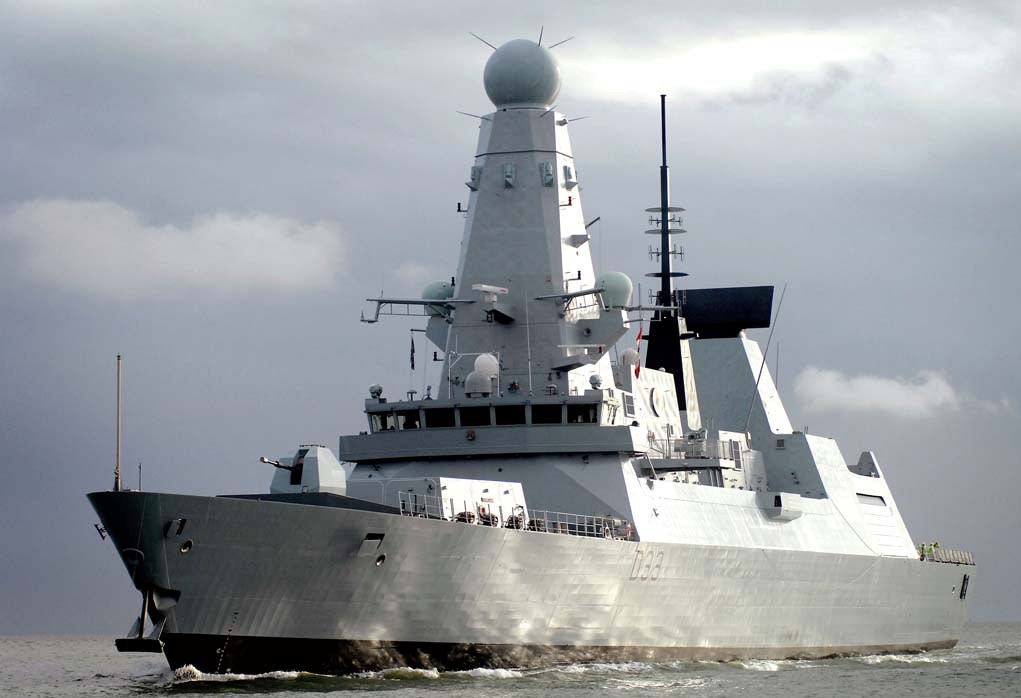
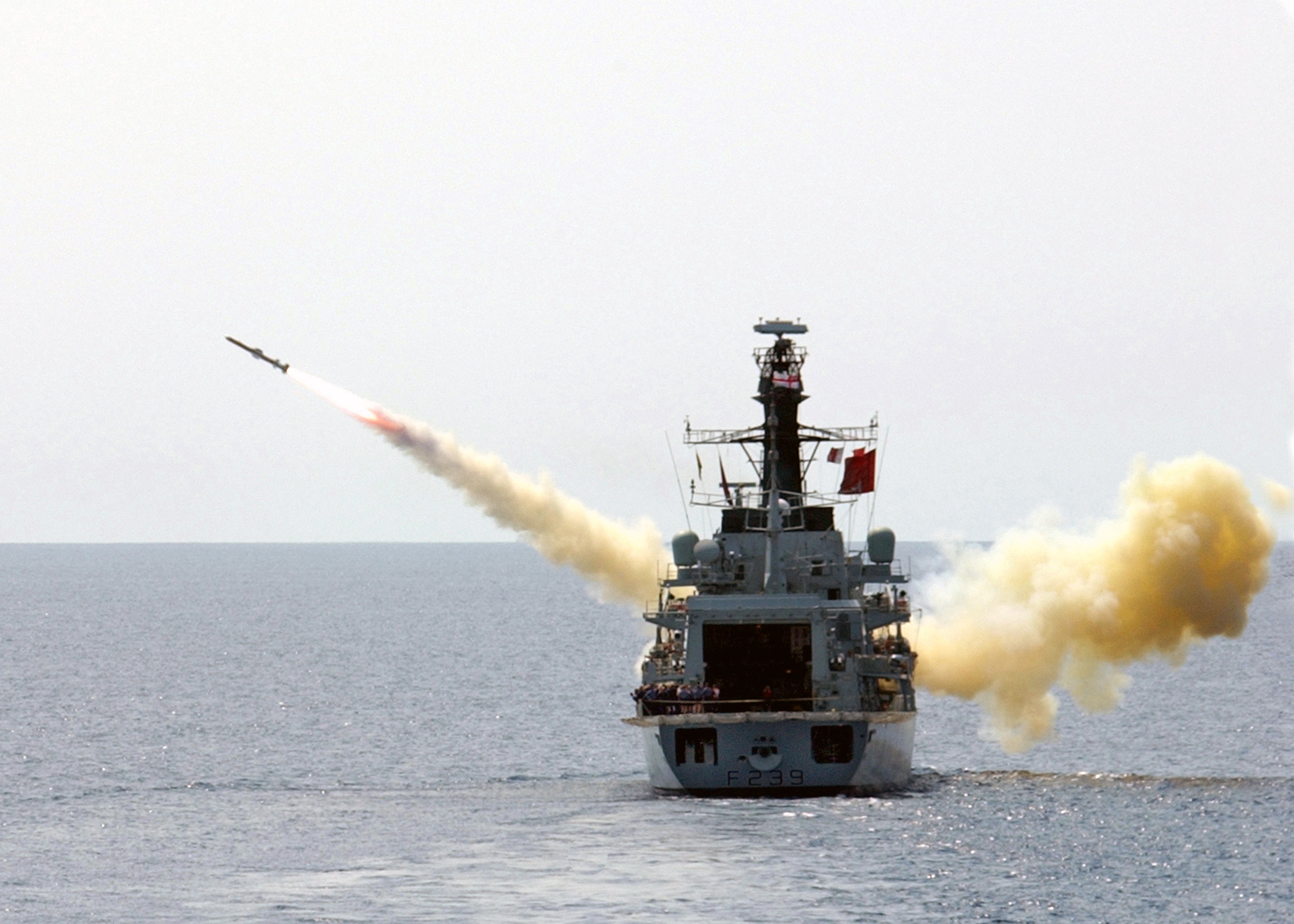
For a UK global diplomatic and export plan........an island lives and prospers on sea power.........just click the ships
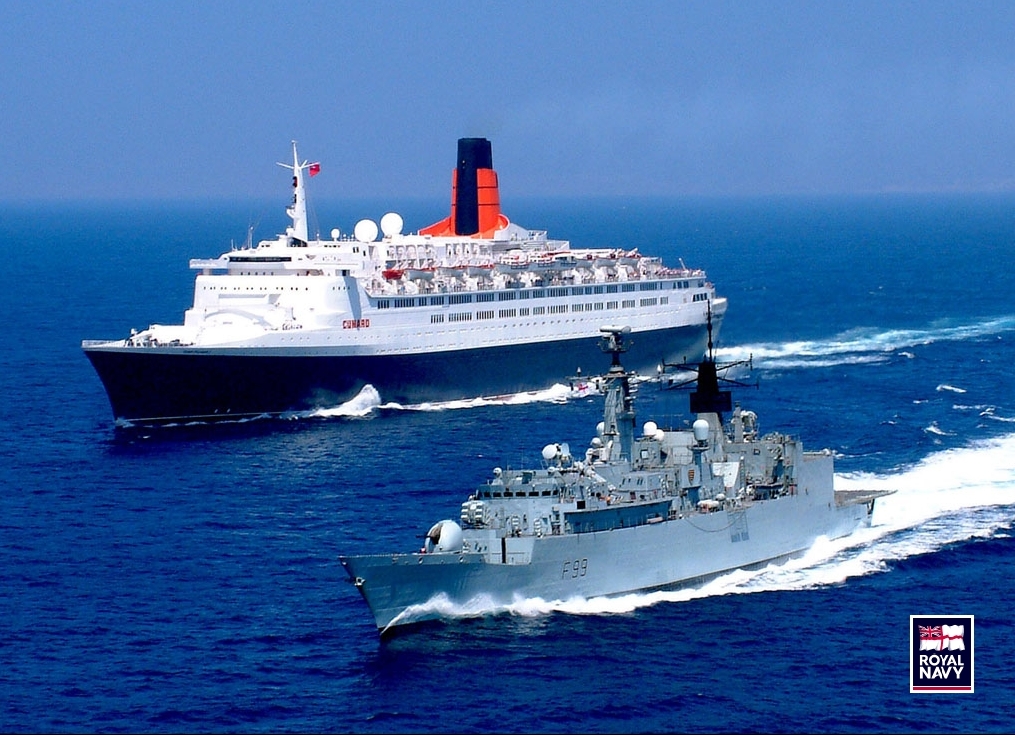
With lower taxes on shipping the Merchant Navy grows - as owners recognise the increasing risks at sea and return to the red duster.
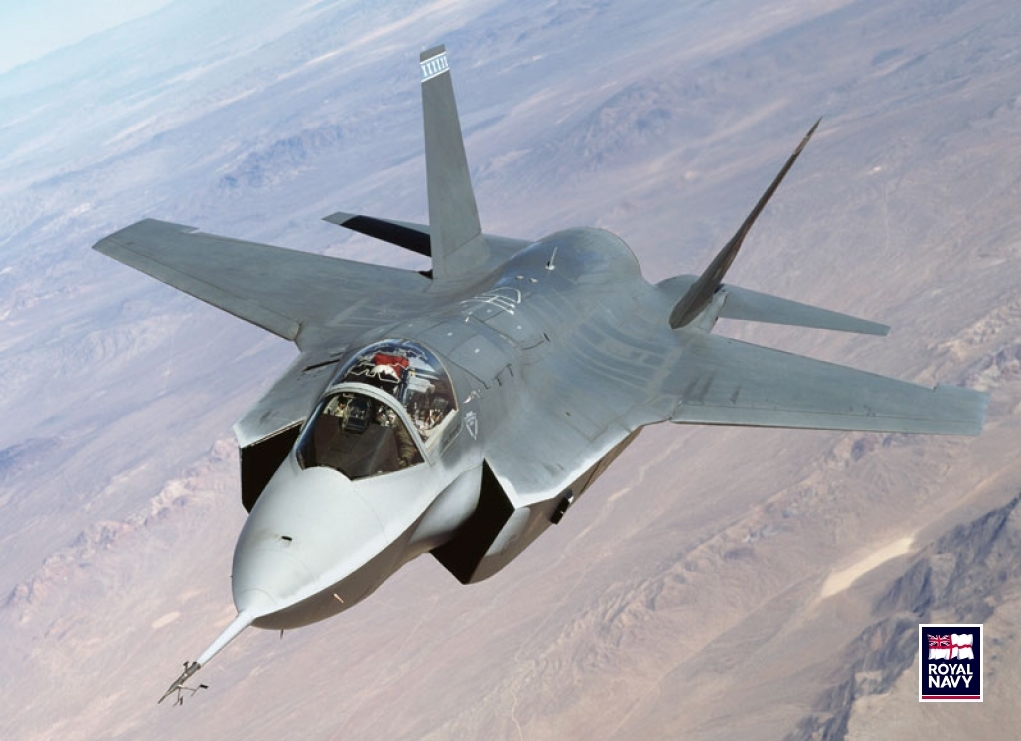
Photo Royal Navy
*
6 JUNE 1944 REMEMBERED
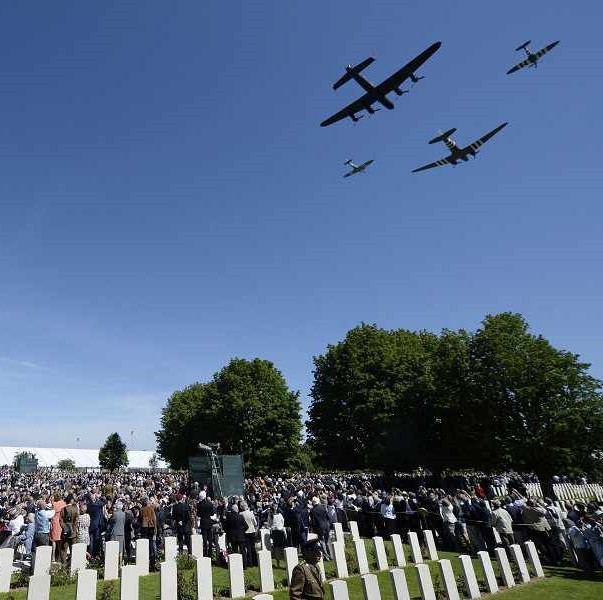
Flypast over Bayeux Cemetery
Two gatherings took place where the British and Canadians landed on D Day. One was entirely British Commonwealth and involved the Queen and Duke with Prince Charles, starting with a service in Bayeux Cathedral for all the veterans and their familes, this followed after a short walk through the city streets by another shorter service at the British Commonwealth Cemetery. Afterwards the Queen talked to all the veterans - very much a family occasion - apart from the veterans, the Queen and the Duke were the only people present who served in the war. The photo below was taken about three days before the men landed by parachute and glider during the first minutes of the 6 June.
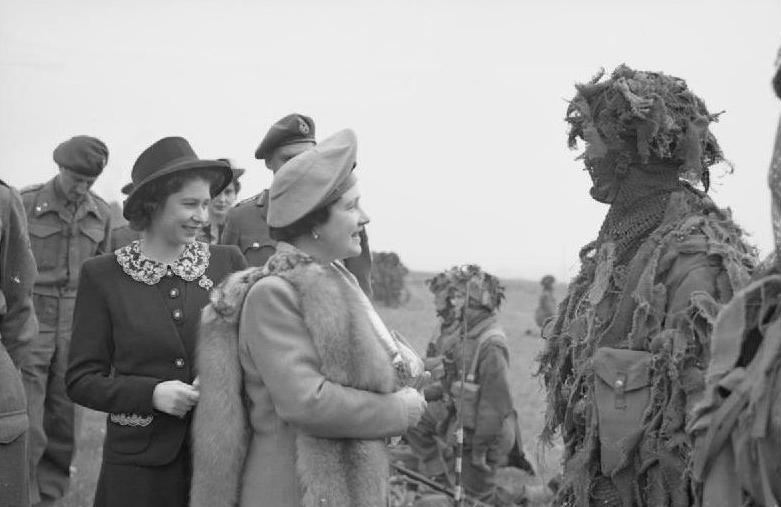
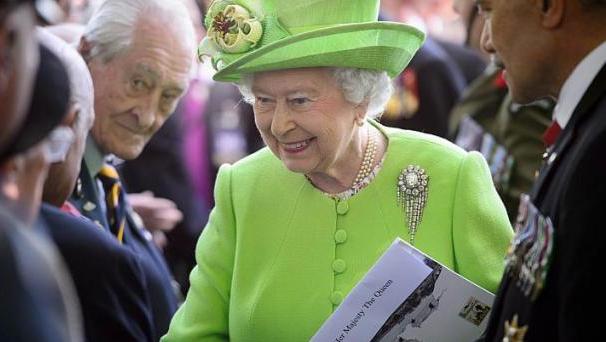
Princess Elizabeth aged 18 with her mother, Queen Elizabeth, talking with soldiers of the 6th Airborne Division a few days before they landed in Normandy. Just behind her mother's hat is General Sir Richard ' Windy ' Gale commanding the 6 Airborne Division. Her father, King George VI is just out of the photo. The Queen with veterans of D Day at this year's ceremony in Bayeux.
That afternoon President Hollande took over the British Sword Beach for Euromania in the form of a rather tasteless TV promotion of the EC super state. Only President Obama went and talked to the veterans present - a handful on display in the hot sun while the Eurocrats sat in the shade - and the Queen chatted with the veterans for several minutes after she arrived from Bayeux.
I'm sure the ceremony at Omaha Beach was very moving, as ever, but let's keep the 6 June for the survivors and their families in future. Thank heavens that's the last official ceremony on the beaches.
*
A GREAT DAY FOR THE ROYAL NAVY
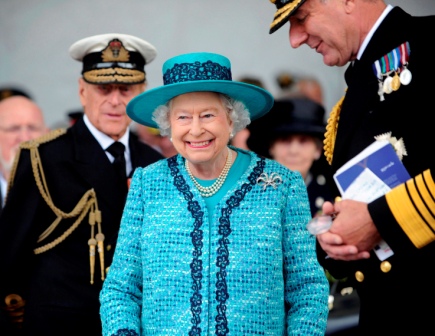
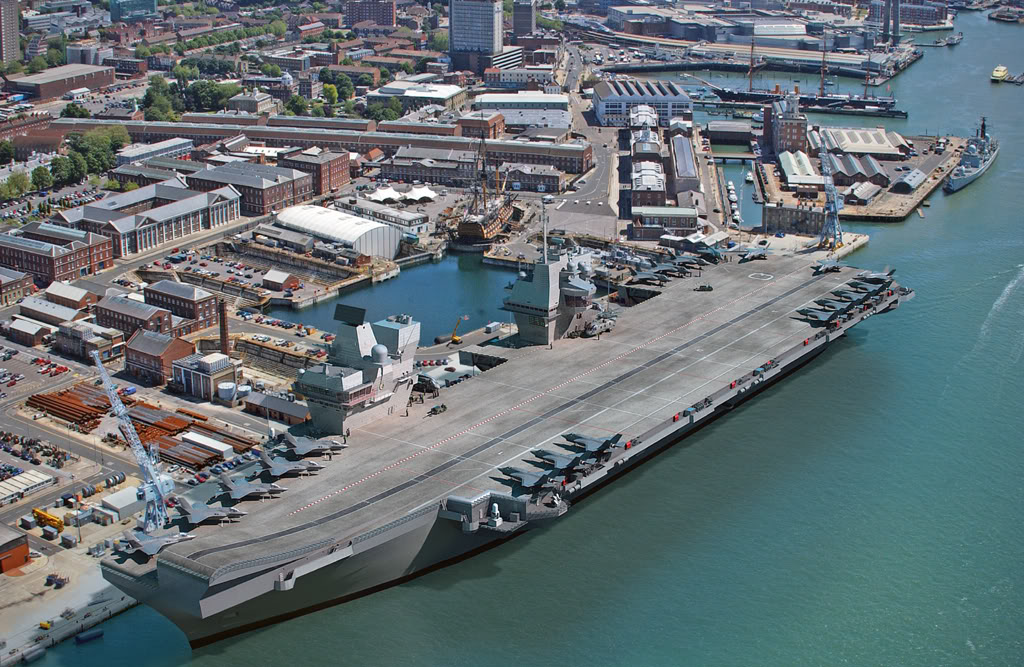
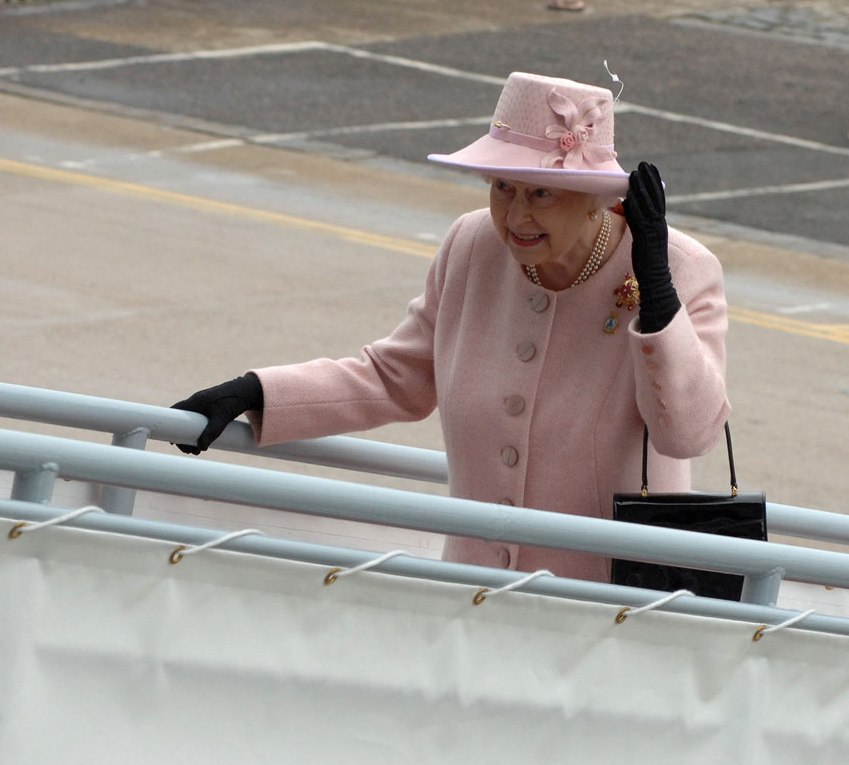
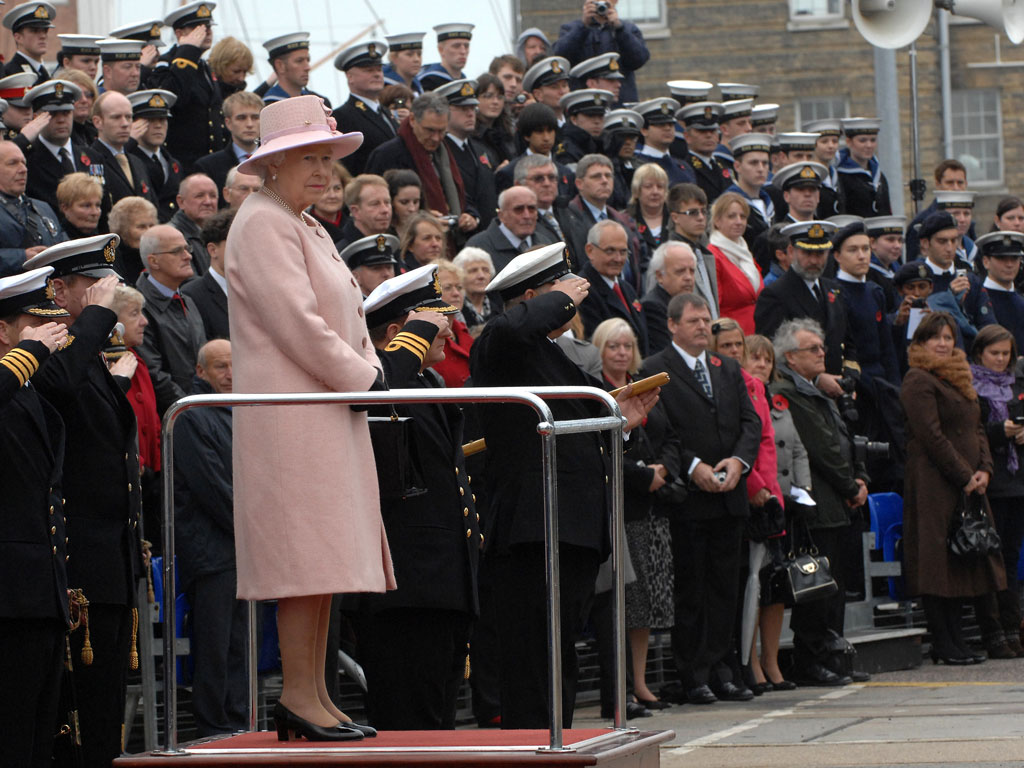
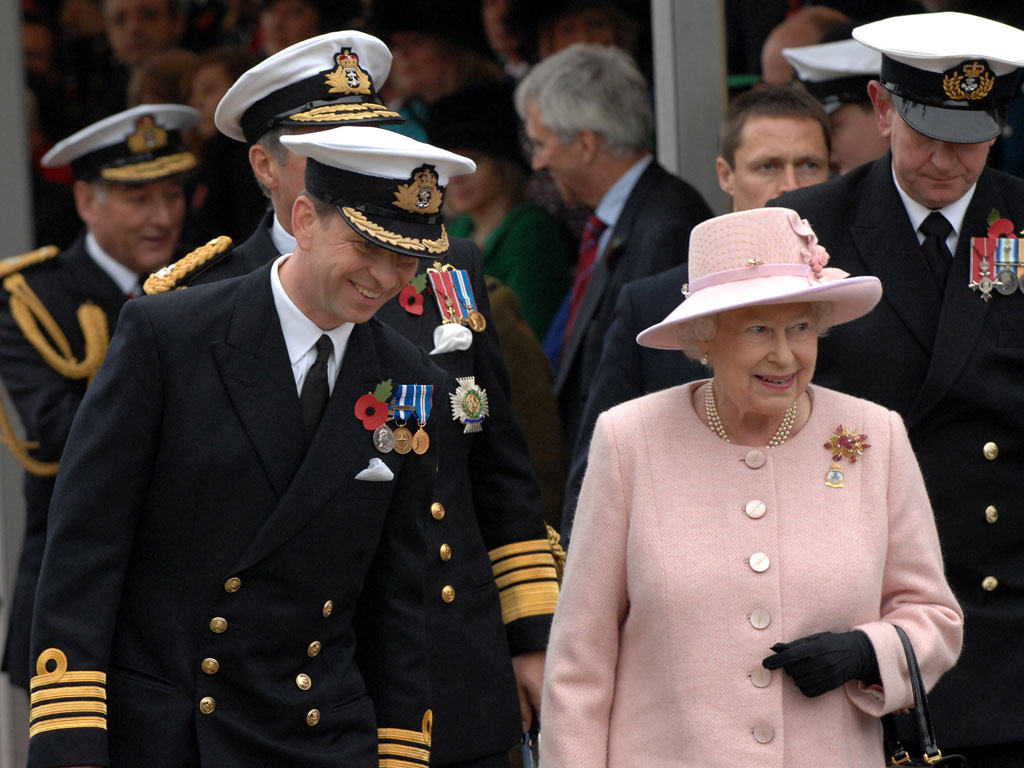
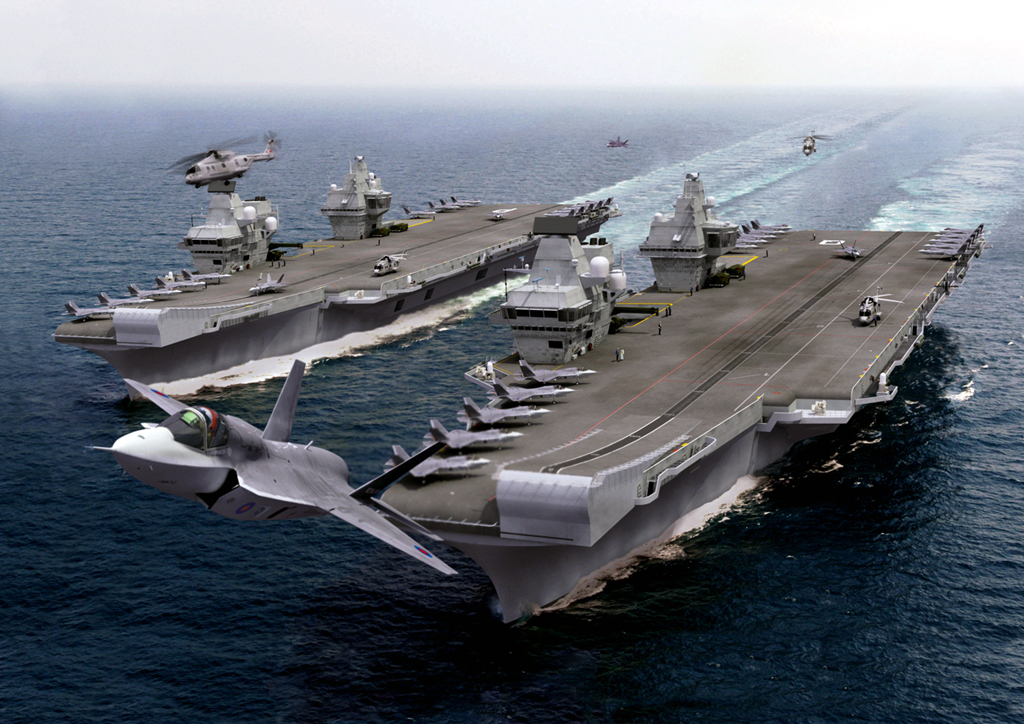
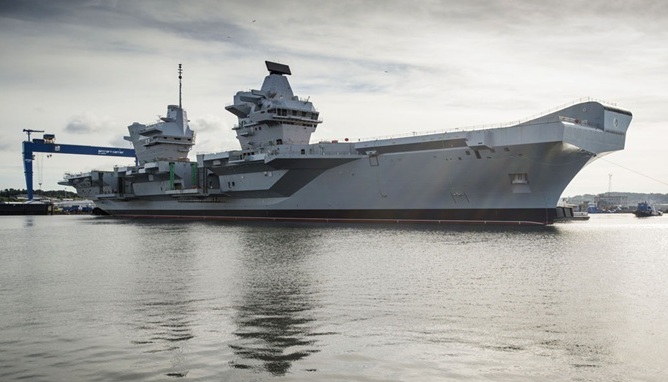
The Queen with the Duke of Edinburgh, Lord High Admiral, and Admiral Sir George Zambellas, admiring the Royal Navy's latest aircraft carrier - HMS Queen Elizabeth - up in Rosyth on the 4 July.
The previous Queen Elizabeth was also a trail blazer, built as a fast oil-fired battleship armed with eight fifteen inch guns, she set a new benchmark for big gun ships and was to serve in two world wars. During the first with the Grand Fleet as Admiral Beatty's flag ship and during the second in the Mediterranean and Far East.
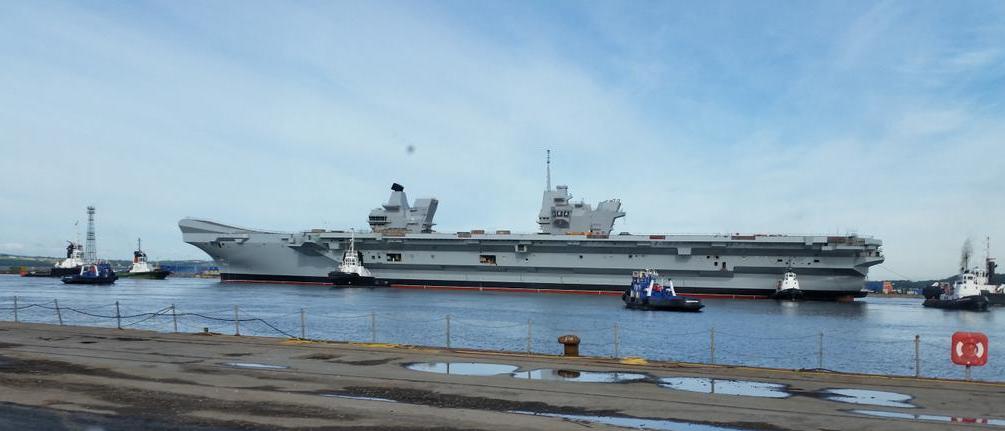
The new HMS Queen Elizabeth weighs in at 72,100 short tons - 65,000 imperial tons - and will carry an air strike group with stealth fighters able to reach targets hundreds of miles away. Her sister ship, HMS Prince of Wales, will take her place in the huge assembly dock now the Queen Elizabeth has taken to the water for her sea trials.
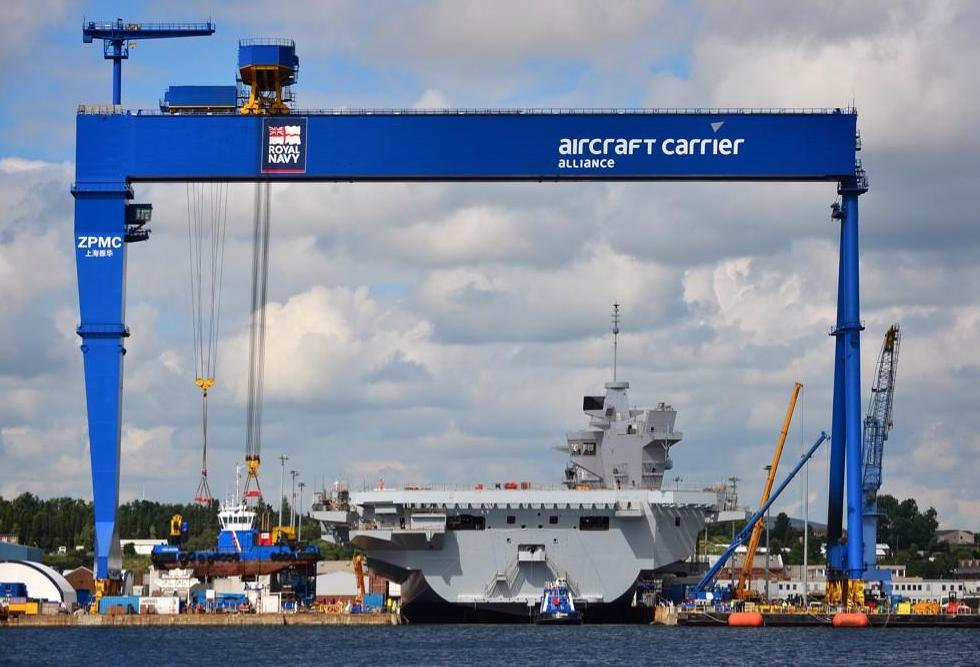
The ship yard crane is so big and powerful that it lifted one tug from the harbour, lifted it the length of QE and lowered it into the flooded dock, so the tug could nudge the newly floating carrier into the harbour.
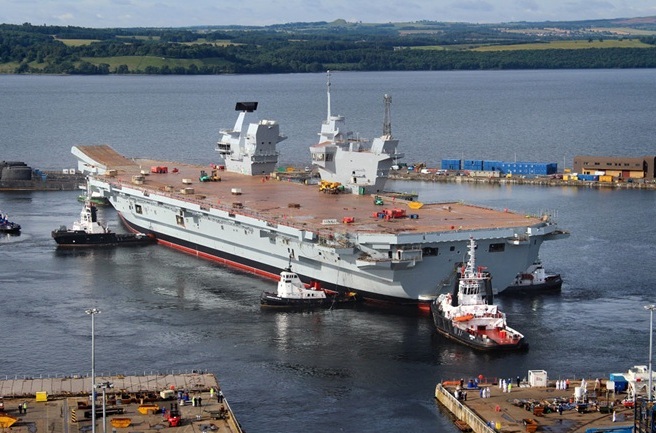
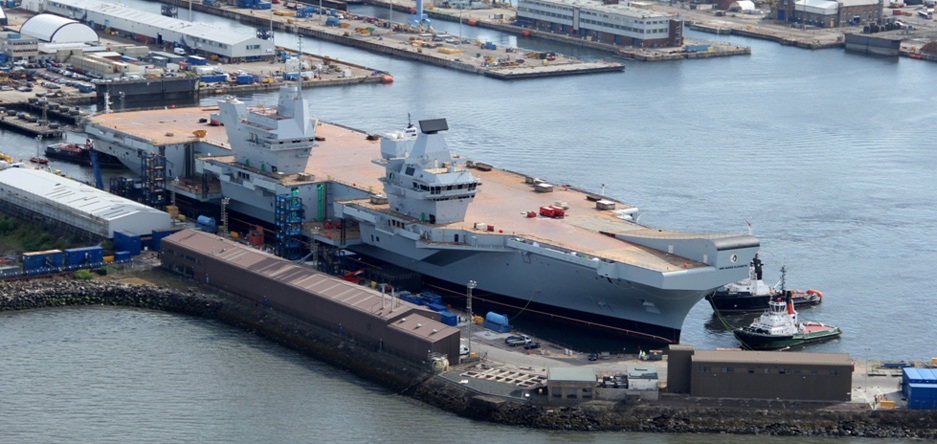
The weather was much more cheerful than for her naming by the Queen!
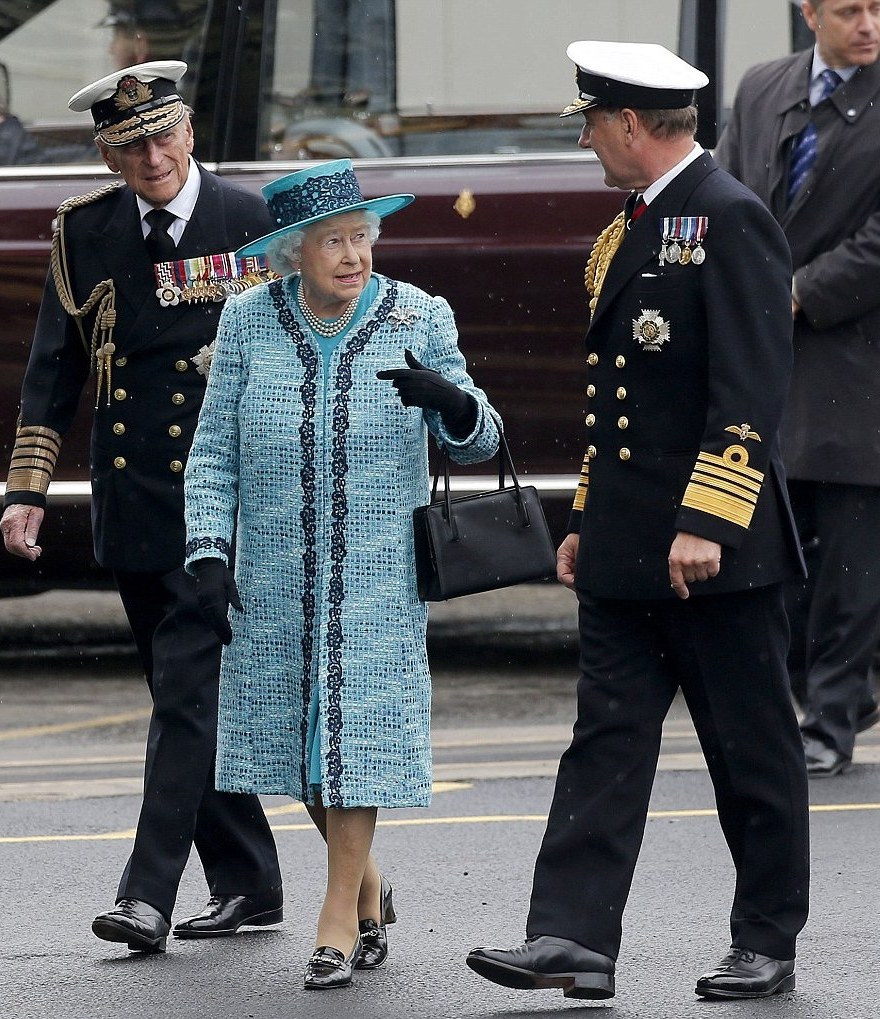
' How big did you say? '
.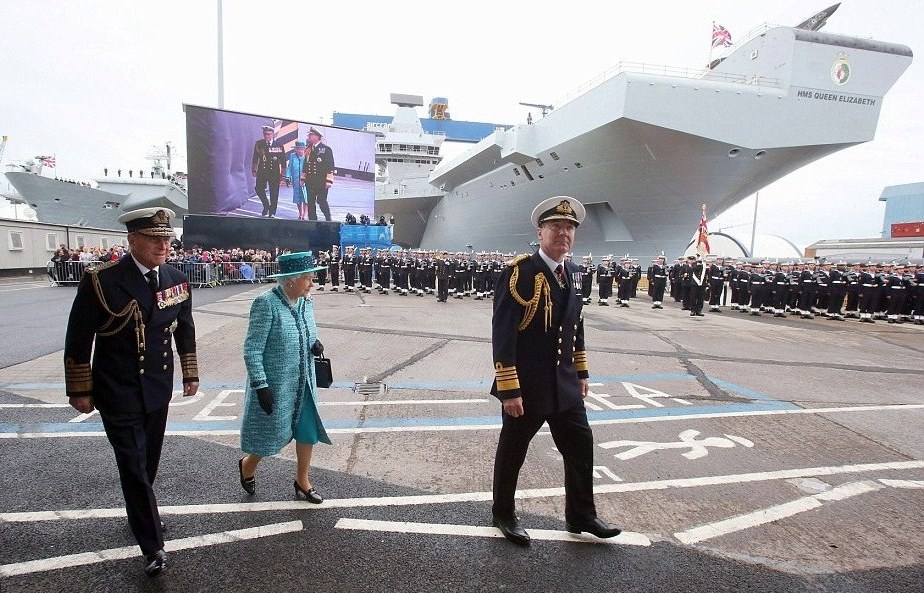
' The one bearing your name is the larger one, Maam.'
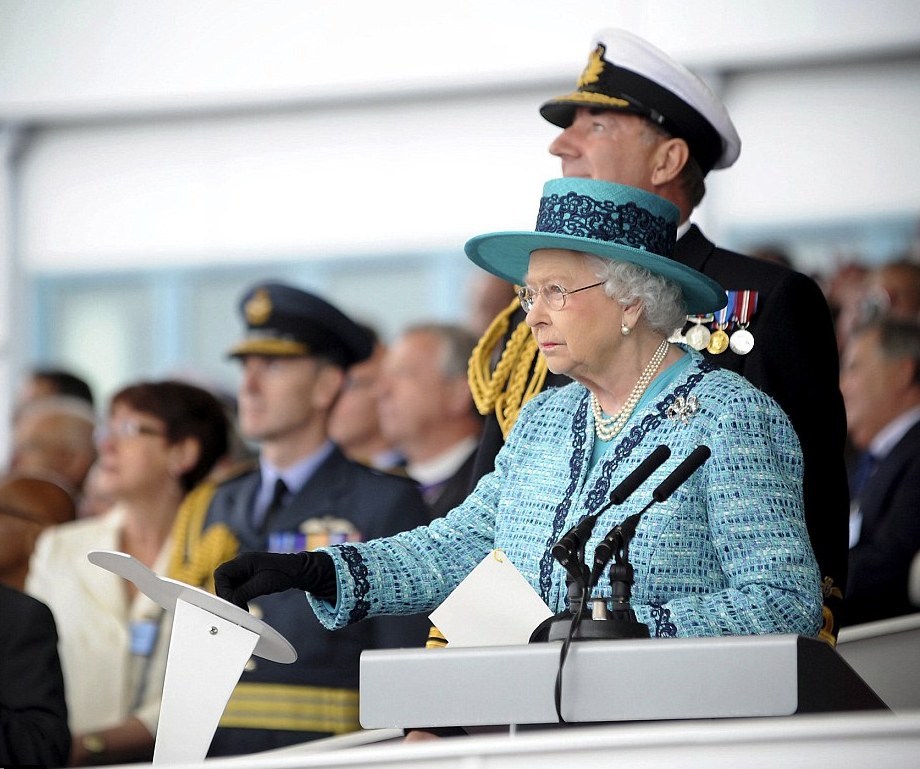
The Queen concentrates as the bottle of Islay single malt hits grey steel.
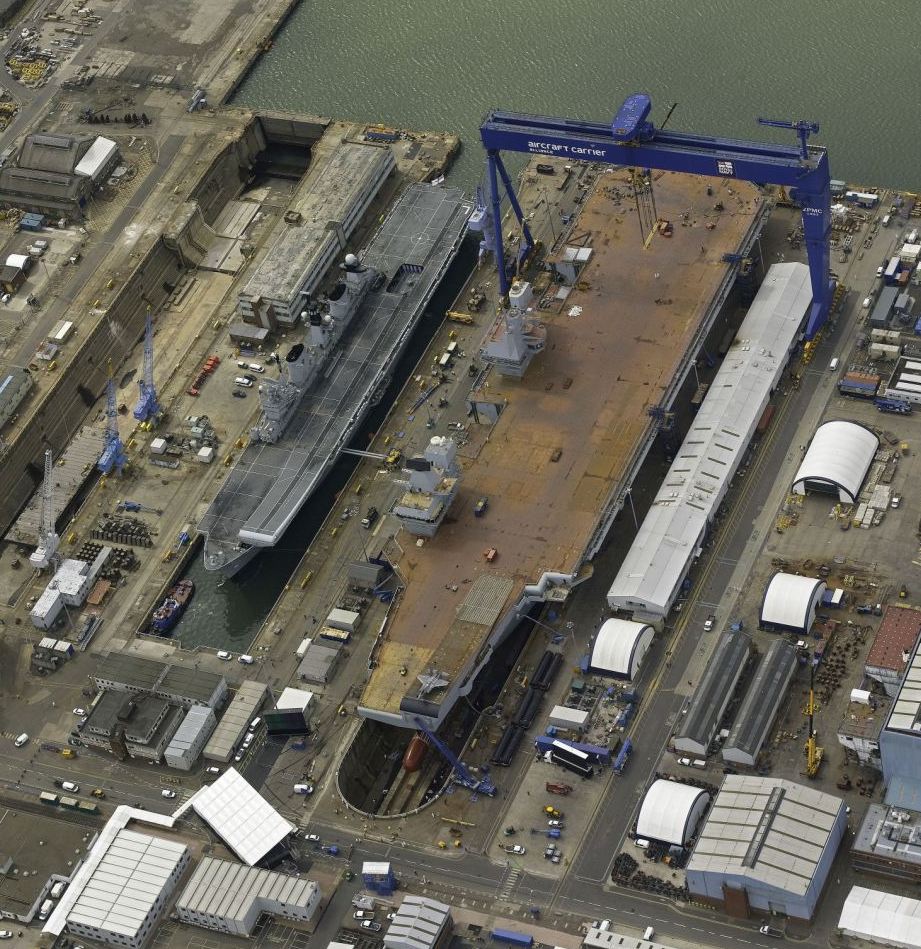
Alongside the new carrier is HMS Illustrious, last of the ' through deck cruisers ' known by the navy as ' see through carriers ' which kept alive carrier jet fighter operations with the Sea Harrier jump jets. Otherwise, John Nott's suicidal naval cuts would have reduced the Royal Navy to a third rate naval power. Harrier carriers made possible liberation of the Falkland Islands.
The jet fighter on the ski ramp of HMS Elizabeth is a mock up but gives a very clear idea of the size of the flight deck. The Royal Navy will fight to ensure that both new aircraft carriers join the fleet. I feel confident the RN and its many staunch fans will win that fight. Everyone who thinks we should have a much stronger navy needs to make their voice heard. This is a job for a single massive public voice. The coming political battle will involve public pressure to double the number of destroyers, frigates and submarines. Ideally the Royal Navy could find plenty of work for a third new carrier and a four-fold increase in surface ships and submarines but let's take things a step at a time. First the British public have to be educated that they live on an island that's becoming as over-crowded as Japan.
Then compare the size of their navy with ours.
All the same, truly, a great day for the Royal Navy ( not to mention Gordon Brown ) and all the ship yard workers, the thousands of skilled people who delivered her on time for the Queen.
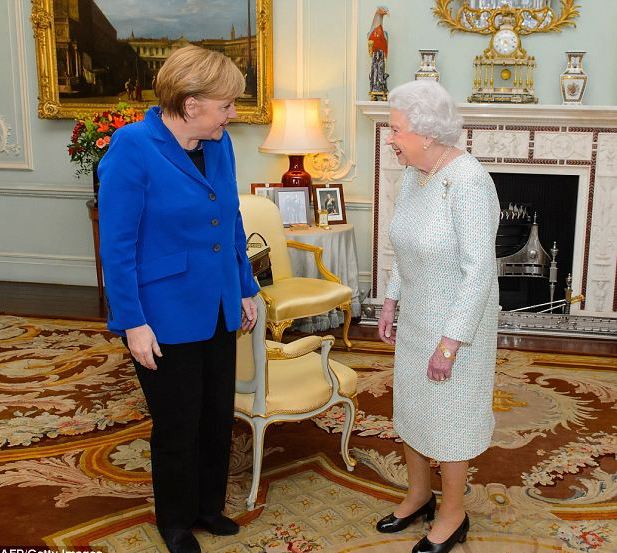
COMMONWEALTH'S GRANDMAMA INVITES EUROPE'S MUTTI TO TEA
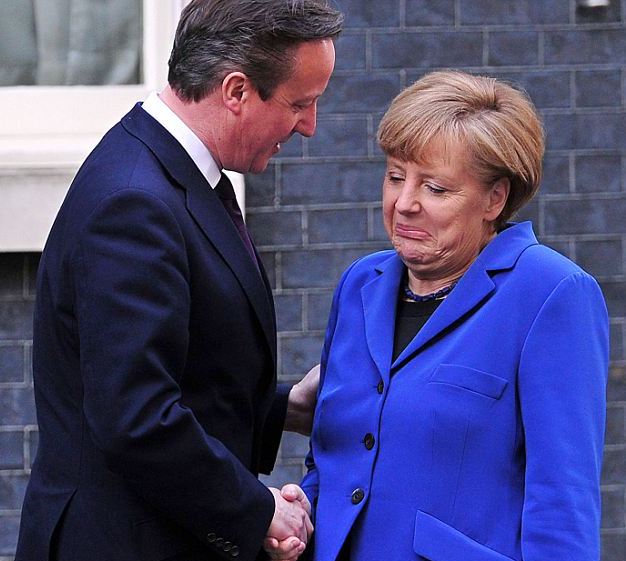
DAVE AND ANGE
Oh dear, Mutti has bitten another partner but this time the victim survived. Dave has an easy decision but he'll make heavy weather of it - as usual. There is a landslide election victory staring him in the face. The Tories and UKIP have 35% and 10-15% of the vote together. The only negotiation with the EC that makes sense is British exit. That should give the ' conservative vote ' up to 55% of the voters, possibly 60% with the prospect of freedom from the EC shackles around our commercial ankles.
Far from facing ruin, freed from Europe's sheet anchor, Britain's economy will grow much faster. We should become a giant Hong Kong anchored off the Continent.
The price is worth paying - much larger armed forces, particularly the Royal Navy, and restoration of the FCO to its former strength.
Best get started, Dave, or we'll give your job to one of the ladies.
*
**************************
SOME HAPPY NEWS
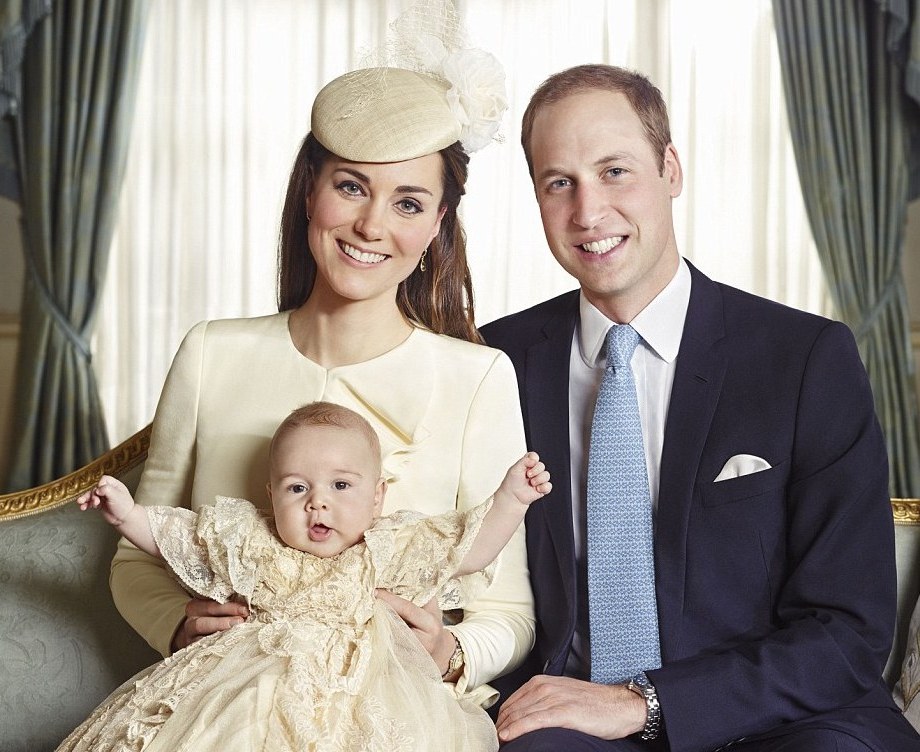
' Hey - I'm over here! '
Prince George on his mother's lap after Christening at the Chapel Royal in St. James's Palace. Two future kings and one future queen. The secret of the Royal Family has always been to move with the times. I think they'll be around for a while longer.
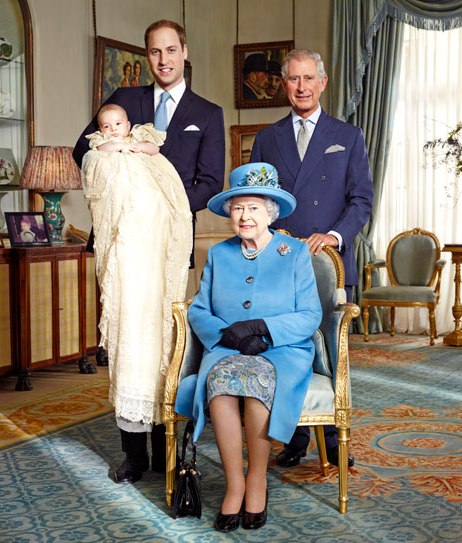
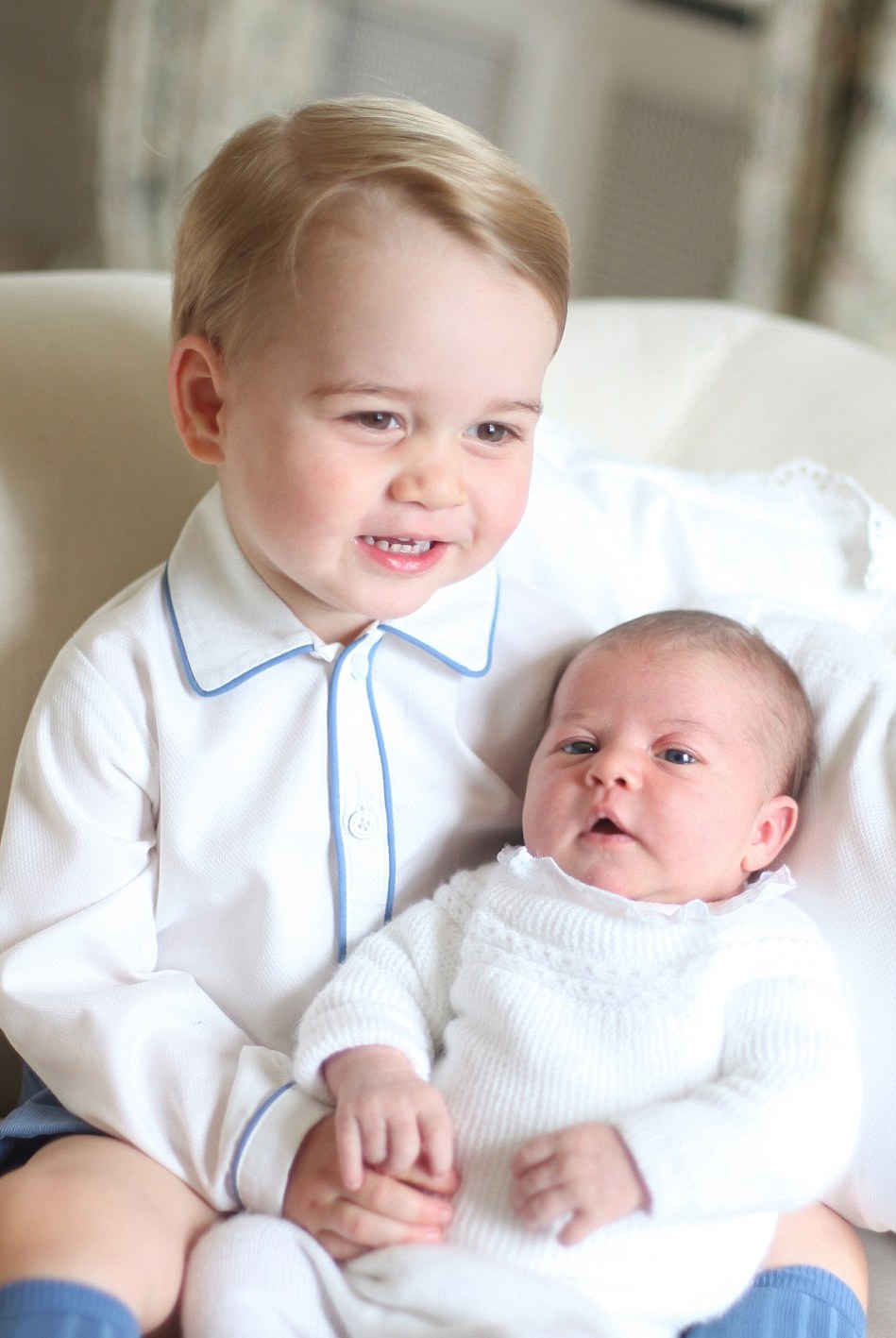
Her Majesty the Queen with three future kings and Prince George with Princess Charlotte
More than a century has passed since the last time such a photo was taken at the Christening of the future King Edward VIII. He, of course, abdicated to marry Mrs Wallis Simpson in 1937. His brother succeeded him as the much loved and respected King George VI, the Queen's father.
Charlotte takes her name from George the Third's much loved queen who named her eldest daughter Charlotte.
*
WHILE THE BRITISH GOVERNMENT AND BAE SACK OUR SHIP DESIGNERS AND SKILLED SHIP BUILDERS - AMERICA LAUNCHES A SUPER DESTROYER ARMED WITH A BAE ADVANCED GUN SYSTEM
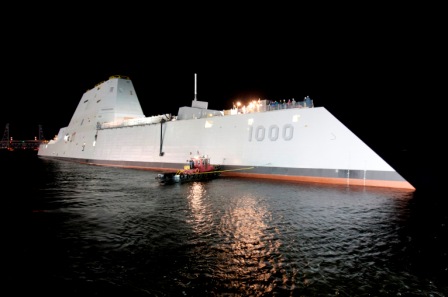
DGG 1000 - USS Zumwalt takes to the water, stealthily at night. Why is it that despite the recent Congress chaos and threat of a Federal Government shut down, the US Department of Defence manages to organise a naval construction programme that runs so that America's shipyards stay open, whereas inexperienced British politicians combined with mediocre management and no competition for BAE clearly fail to do this every time?
I WONDER IF WE COULD PERSUADE AMANDA TO COME OVER HERE?
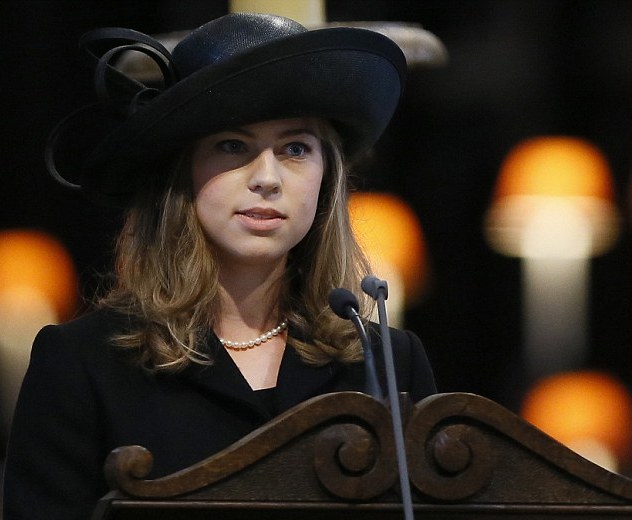
Amanda Thatcher reads from Saint Paul's Epistles at her Grandmother's funeral in Saint Paul's Cathedral.
Margaret Thatcher's greatest legacy may prove her captivating and composed granddaughter.
FREEDOM HAS LOST A GREAT FRIEND
Margaret Thatcher died peacefully on the 8 April. The most well educated of all British Prime Ministers, of all her many great achievements, she remained very proud of her days as a young research chemist on the team that created soft-frozen ice cream. That's what made her special. She kept her feet on the ground. She invariably found time for children and young people, no matter what the world was throwing at her.
Eleven years later, after winning three elections, when Margaret Thatcher was stabbed in the back by Heseltine and others, we had such a big budget surplus that we were paying back the National debt. She had it down to 26.7% of annual gnp and had she gone another five years we would have paid off the rest. Strikes fell from 29 million days lost per year to 2 millions during her premiership and last year were 250,000 days. She set the course for the new century. When her successor, John Major, won the next election, he scored 14 million votes, the most ever by a political party in Britain. When he lost to Tony Blair we were closing fast to overtake the gnp of reunited Germany. Look at what Tony Blair, Gordon Brown and David Cameron have done with her legacy.
One of the blessings of a profession as a diplomat is that you get about socially. I have known nearly all the main political actors during this era from Arthur Scargill, the miners' leader to a friend in the Cabinet Office who masterminded his defeat. I liked them both although I didn't share Arthur Scargill's politics. I liked Dennis Thatcher. Everyone did who knew him. We often met and chatted when we collected our respective family photographs at the shop that used to occupy the corner of Whitehall and Northumberland Avenue.
I liked Margaret Thatcher. She was honest, straight dealing, very intelligent though very modest in her own funny way. Despite claims to the contrary, she had a sense of humour, very quick. Long after leaving Ottawa, I wrote her speech to the Canadian Parliament and had the remarkable pleasure of watching Maggie tell one of my jokes as her opening line. Somewhere I have a tape sent to me in Sussex by Don Newman of CBC on behalf of the Parliamentary Press Gallery.
I shall remember her honesty, warmth, courage. She never forgot where she started in life, devoting herself to help others climb the ladder.
A great lady. I shall miss her.
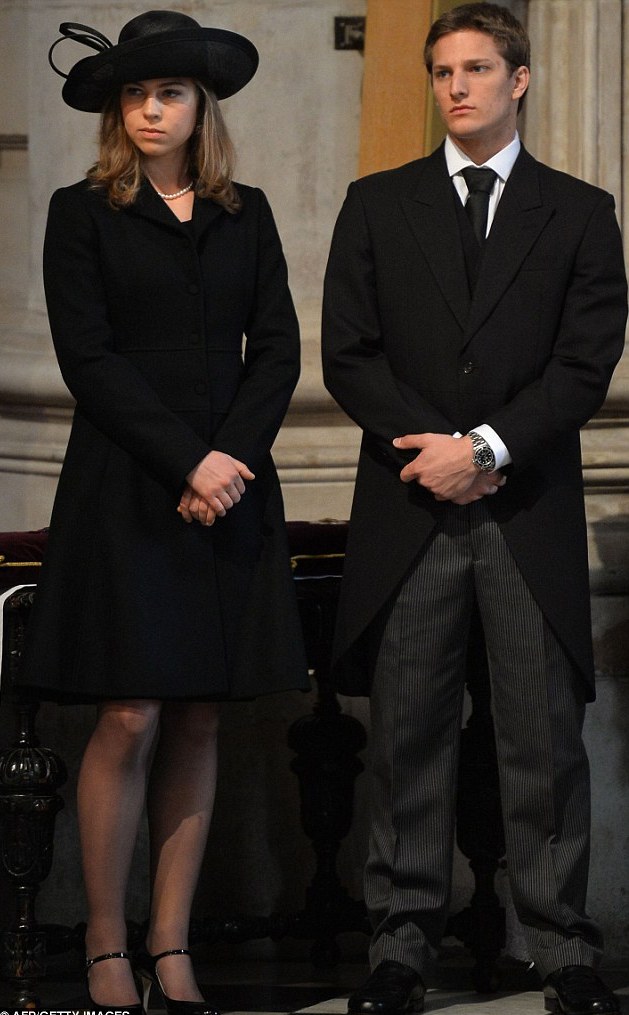
Amanda and Michael Thatcher waiting to play their parts in their grandmother's funeral. What a splendid advert they made for America's youth.
' I never read a newspaper.'
Hugh Grant, comic film actor, campaigning for government regulation of the British press for the first time since 1695.
*
THE STRUGGLE FOR EUROPE
With
Apologies to Chester Wilmot
*
SCOTLAND THE SHREWD
All sorts of questions are raised by the Scottish Nationalist Party's ambition to break up the United Kingdom. Few answers are coming from the Scottish Nationalist Party. My hunch is that this obfuscation will backfire as the vote for ' independence ' draws closer - actually separation from England and Wales, Northern Ireland and the Channel Islands plus all the United Kingdom's dependent territories.
Scottish history is rarely taught in English schools and - here goes - requires a little cramming.
England and Scotland had shared the same king for more than a century - apart from a dozen years rule by Oliver Cromwell - by the time the 1707 Act of Union came to pass.
The last Tudor monarch of England, Elizabeth I, never married and when she died in 1603 her distant cousin, James VI of Scotland became James I of England as well. Since Wales and Ireland were part of Elizabeth's kingdom, he was the first ruler of the whole British Isles. The two countries remained separate with Parliaments in London and Edinburgh. James ruled through a personal union. His critics named him the wisest fool in Christendom but modern historians now regard him as an intelligent and thoughtful monarch. James became King of Scotland after his mother's execution by Elizabeth I - the grim culmination of nearly a century of civil wars and power struggles in Scotland, often with French interventions, indeed his grandmother, Mary of Guise, led an army and ruled as Queen Consort. Under his mother, Mary, the country was torn apart by squabbling nobles until edging towards what we would call a failed state today. Mary fled to England. Sadly, she became the focus of Catholic ambitions to destroy the Reformation and return England to the Papal flock.
The Scottish Nationalists skip this part of history and look back 600 years to Scotland's struggles to defy conquest by the hated English. Far more relevant to our times are the two hundred years from 1500 - 1707. The first century of chaos was recent memory when James set off for Whitehall and he regarded full union as the best way forward for both countries. And both flourished. Shakespeare wrote some of his finest work during this time. James had his faults - belief in the divine right of kings to rule under God was to lead to his son losing a civil war against Parliament - but the over-riding strategy created a sea trading nation that would become the greatest power on the planet.
The Civil War ended in 1648 with his son, Charles I, held prisoner by Parliament. Charles then made the same move as Mary Queen of Scots - secretly negotiated with France to invade the British Isles and secure his throne. Charles and his descendents were secret Catholics and that implied a double threat to the protestant kingdom that had beaten the Spanish Armada in the days of Elizabeth. Charles was executed in 1649 and his son fled to France. An attempt to regain the throne failed at the Battle of Worcester in 1651 and the young Charles II hid in an oak tree during his escape. Nine years later, fed up with the Parliamentary and puritan rule, Cromwell dead, his son asked the king to return. There were still secret treaties with France - followed by wars - but the great struggle was for control of the narrow seas around our islands. Two powers threatened English trade - France and Holland. The most dangerous were the Dutch.
Now commenced a series of short wars with many naval battles in the Channel and the North Sea. Some with France, most with Holland. The Dutch even burned the English fleet in the River Medway including its flagship, the Royal Charles, named after the king. Despite brilliant leaders such as van Tromp and van Ruyter, the Dutch lost and England became the dominant sea power on the planet.
Charles II known as the Merry Monarch for his dissolute Court, died in 1685 and was succeeded by his brother, James II, who was clever though arrogant and thick-skinned. James was openly Catholic and appointed Catholics to key positions. Within three years the Government with the blessing of Parliament sent for the protestant Prince of Orange, ruler of Holland, who was married to Mary Stuart, also a protestant, daughter of James II. They were in fact first cousins. A peaceful invasion took place for the leading general, John Churchill, great ancestor of Winston, crossed over to William's camp the night before the expected battle to avoid needless bloodshed. There was no battle. James fled London for France.
The resulting settlement made William and Mary joint monarchs - the only ones in British history - and all state papers were signed by both. Parliament and the Monarchy drew up a treaty which agreed their respective powers. This was known as the Glorious Revolution of 1688 and laid the foundation of our modern democratic monarchy.
William had fought Louis XIV of France to keep Holland's freedom. He wasted no time involving English power on the Continent and John Churchill's eventual victories were to make him the greatest British general who has ever lived.
Not all Scots accepted the new monarchs. Some nobles stayed loyal to James ( VII of Scotland ) and this brought civil war north of the border. The Jacobite nobles had support among the Highlanders and won a victory at the Pass of Killicrankie in 1698 only to lose another battle within months, thus defeating their campaign.
Scotland already found itself at a disadvantage when trading with the growing economic power south of the border.
England paid for its wars from taxes on imports and trade. The Scots made it possible to avoid these taxes by landing goods in Scotland rather than English ports. A series of bad harvests didn't help either and thus was born the idea of rivalling the English by founding a Scottish colony - New Caledonia - not in the Pacific Ocean but on the coast of Central America in what is today, Panama, at a place called Darien. Scotland's government and bankers raised the money in Amsterdam and London. But the place chosen, Darien, belonged to Spain. England was at war with France and King William did not want to fight Spain as well. He was lukewarm to the idea. The East India Company had been given a monopoly on such trading ventures and were opposed. This opposition prevailed and the Dutch and English backers withdrew. The punters then raised £ 400,000 from all over Scotland and the scheme went ahead - but - those involved were poor planners and even worse judges of people. They appointed incompetents and adventurers to lead the expedition and the inevitable result was a double disaster. Two waves of colonists were lost from disease, before the Spanish attacked and the survivors surrendered. English ships were not sent as a rescue party - William had no desire to fight Spain as well as France. The loss of money represented 20% of Scotland's gnp at that time - please take note Germans as you make yourselves liable for 25% of yours by backing the Eurozone.
Economic catastrophe persuaded the Scottish leaders to approach the English and seek political and economic union. One need only read the Act of Union to realise the lack of trust between the two sides. The bulk of the Act is a list of the taxes that the combined nation will impose on pretty well everything. Only towards the end does the Act confirm that £ 398,085 and ten shillings plus any other monies will be paid into the Scottish Exchequer to redeem all its debts. ( One wag has calculated that returning the capital with 300 years interest and inflation will cost Scotland £ 853 trillions because they are breaking the deal. ) The Act was passed separately by both Parliaments - no room for the slightest wriggle by the Scots - and reminds me of the level of trust between the FCO and the Quai d'Orsay when we drew up the modern Channel Tunnel Treaty.
The result for Scotland was membership of the most advanced economy in the world and within a generation. Indeed, while the 1715 rebellion against the King in London had some support, rapid economic growth denied Bonnie Prince Charlie any support from those who ran Scotland by 1745 and made his failure certain. Edinburgh became the Athens of the North. The home city of Adam Smith. The new United Kingdom became the world's first super power with no other in sight for two hundred years. Think about that - when the Scottish Nationalists want to turn back the clock three hundred years to the days of the Darien colony.
What happens after the Scottish Nationalists renege on the Act the Union?
Scottish Nationalists claim that Scotland will remain within the EC. This claim shows no understanding of EC politics. Neither Belgium nor Spain wants to signal Flanders or Catalonia that they can break away with impunity. Cyprus already complains that Scotland should not be allowed to jump the queue for EC membership - Cyprus has issues with breakaway parts of its own island.
My hunch is that whatever the lawyers say - and none have been consulted formally, if at all - Scotland will be forced to apply to join the EC. ( Since writing this passage a few weeks ago the EC Commission have confirmed that Scotland would have to apply as a new state.) That means joining the Euro because there is no way, given the present banking crisis, that the Bank of England can underwrite a foreign economy over which it has no control. Scotland will have to exit the pound at midnight on Alex Salmond day. Given the uncertainties at such a moment, Scotland's new currency would nose dive while inflation would soar. Moreover, this situation could become prolonged.
Scotland will be regarded with great suspicion by NATO allies who are also EC member states. Denmark, Norway, France, Germany, Holland, UK and USA don't want another Irish Republic. Don't want another neutral country in a strategic geographical position accepting NATO's de facto protection while claiming de jure that they need make no contribution to their own defence. Americans in particular are fed up with freeloaders. Everyone is Irish during an election in the USA but the other three years people say what they think. Scotland's neighbours may decide to block its EC membership until their security demands are met to NATO's satisfaction. The USA can stand back and let the Danes and Dutch, Germans and Norwegians give the nasty messages then step in as judge and jury.
England faces the same problem as 300 years ago. We'll have customs and passport controls along the Scottish border. We'll need much more patrol capacity along the coasts to stop smuggling of goods and people. After a near miss with Ireland which cost the taxpayer £ 8 billions - so far - the Scottish Nationalists expect us to tolerate a failed state on mainland Great Britain.
Scots have gone all over the World. Right here in Bern they built the main bridge over the River Aare. Standard Chartered Bank from Lahore to Saigon was managed by Scots. These are the true sons and daughters of the Darien dream, who went all over the world, secure in their support from a strong base in the United Kingdom. Why aren't these Scots allowed to vote in 2014? Why not all the Scots resident in England, Wales and Northern Ireland?
And, if the Scottish Nationalists promote a return to the 13th century, why shouldn't the Orkney and Shetland Islanders vote for a return to the 15th century when they still were part of the Kingdom of Denmark? They'd escape joining the Euro. Perhaps the rest of the UK could negotiate an attractive deal with the Northern Islanders.....
*